
All eight Nepal Premier League teams have moved into the next phase of Season 3 planning after retentions and the July auction gave each squad a clearer domestic structure.
The 2026 field remains built around Janakpur Bolts, Lumbini Lions, Sudurpaschim Royals, Biratnagar Kings, Kathmandu Gorkhas, Pokhara Avengers, Karnali Yaks and Chitwan Rhinos. Each team entered the auction with a retained core and a different purse. That starting point shaped every later decision. Teams with strong continuity could target one or two exact gaps, while teams that released major names needed broader repairs across batting, bowling and squad depth.
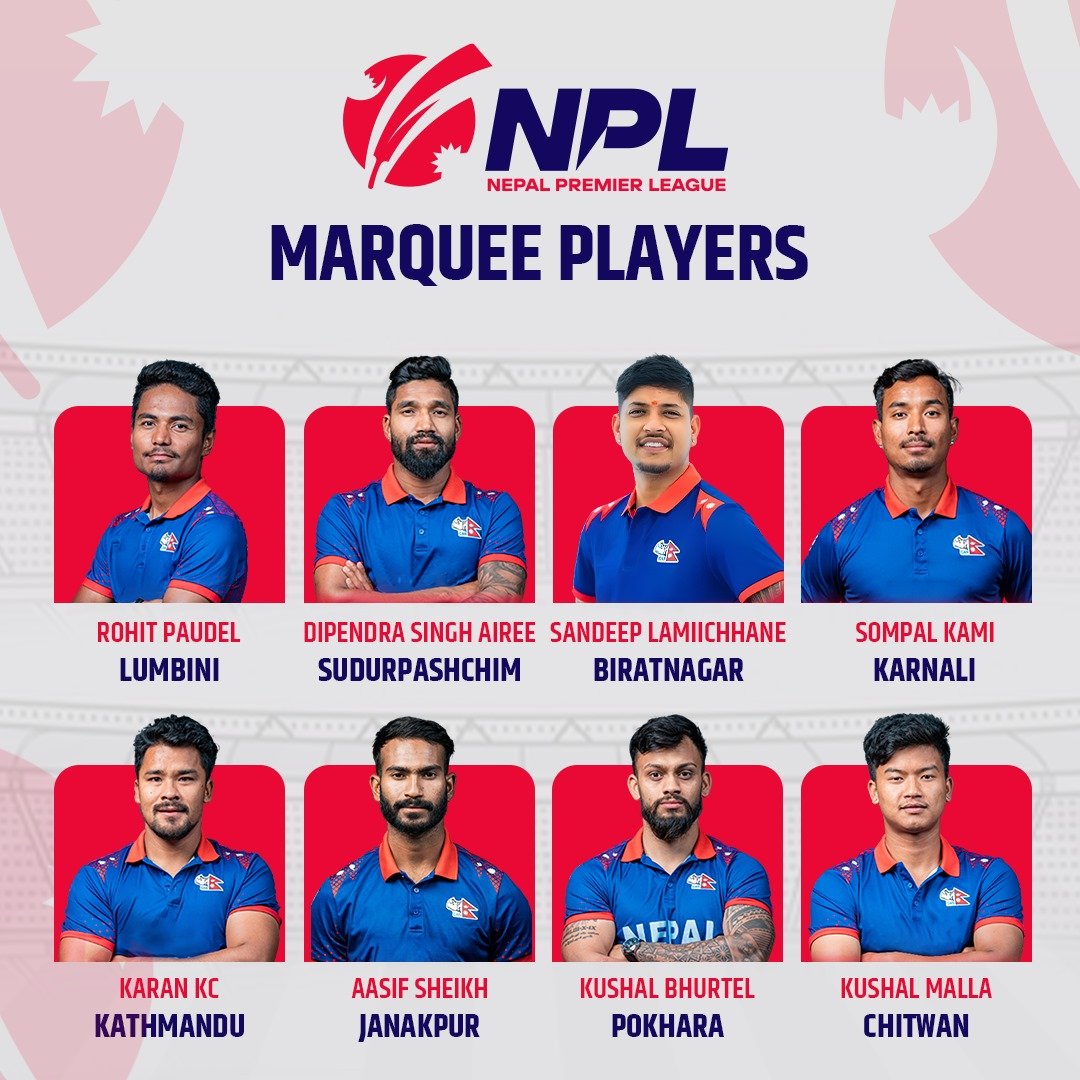
Lumbini Lions carried the strongest status after their previous title run and retained Rohit Paudel as a central figure. Their auction became more powerful when Aasif Sheikh joined for NPR 20 lakh. That signing gives Lumbini a high-value wicketkeeper-batter and creates one of the strongest domestic headlines of the Season 3 build. A champion side adding the auction top buy will be judged by a different standard once the tournament begins.
Sudurpaschim Royals kept Dipendra Singh Airee and several familiar domestic names after reaching finals in successive seasons. Their planning is less about proving quality and more about finding the missing edge. A strong retained group can reduce auction pressure, but it also raises expectations. If a team has already been close to the title, every new signing is measured by whether it helps convert another deep run into a trophy.
Janakpur Bolts have the most dramatic rebuild. Releasing Aasif Sheikh changed the team identity, and the auction forced the franchise to show how it wants to move forward. Trit Raj Das gave Janakpur a Category A addition, and other domestic buys help rebuild squad shape. The key question is whether the Bolts can turn purse strength into match strength after a poor second season. Their supporters will look for a clearer leadership and batting plan.
Kathmandu Gorkhas entered with Karan KC and a smaller auction purse than several rivals. That made their recruitment more selective. A team with limited remaining funds cannot chase every name, so it needs role clarity. Kathmandu planning should be judged on whether it found enough batting support, bowling cover and reserve options around retained senior players. In a short T20 tournament, a few smart low-cost picks can matter as much as one major purchase.
Biratnagar Kings retained Sandeep Lamichhane and kept a recognizable domestic base. Their auction additions, including a Category A move for Rupesh Kumar Singh, point toward a squad that values all-round balance and spin strength. Biratnagar have often been linked with high-profile names and strong cricket attention, but Season 3 will still depend on domestic roles. Overseas players can lift a squad, but local players decide many of the middle overs and fielding standards.
Pokhara Avengers continued with Kushal Bhurtel as a key figure and added Arjun Gharti from Category A. That gives Pokhara a strong domestic storyline because both top-order and wicketkeeping roles matter in T20 construction. The team also has to make sure its depth is not too dependent on overseas signings. A good NPL squad needs local players who can carry innings, finish overs and adjust to Kirtipur-style conditions without a long settling period.
Karnali Yaks retained Sompal Kami, Gulshan Kumar Jha and other domestic options before the auction. Their challenge is to convert a competitive core into a full squad that can handle pressure games. Karnali Category B and Category C moves are important because their retained players already give them visible names. The surrounding roles decide whether that core has enough support across the powerplay, middle overs and late innings.
Chitwan Rhinos kept faith with Kushal Malla and several domestic players after a difficult previous season. Their Category A signing of Bibek Kumar Yadav gives the team another important all-round option. Chitwan planning is about balance and rebound. A side that slipped down the table needs more than name value; it needs roles that connect cleanly from the top order to bowling changes and late-innings hitting.
The team picture for NPL 2026 is now much clearer than it was before the retention window. Retentions gave every franchise a base, auction results filled many domestic gaps and the remaining squad questions are easier to track. The next layer will be overseas signings, coaching plans, injury cover and final squad announcements. For fans, the eight-team race has moved from speculation to real comparison.
The auction also changes how team previews should be written. Older previews could only discuss retained players and expected needs. New previews can compare actual auction additions with the roles still open. That makes each team page more useful for supporters because the discussion can move from general squad talk to specific selection questions. Who opens, who keeps wicket, who bowls at the death and who fills the overseas slots are now real team-by-team topics.
The next stage should be tracked without mixing confirmed squad facts with fan guesses. Retained names, auction buys and published prices can be treated as confirmed data. Overseas targets, leadership changes and training-camp plans need direct confirmation before they are written as fact. That approach keeps the NPL team coverage trustworthy and gives each franchise a clean page that can be updated as official Season 3 information arrives.
That matters for homepage and archive readers as well. A team story should quickly show which squads changed, which cores stayed intact and where the next confirmed update will affect the Nepal Premier League table.