
Quick Facts
- Second protest
- Saturday, 21 November 2026, TU Ground gate, Kirtipur
- Slogans
- "Stop black marketing" against the cricket association's officials
- Sale
- Friday, 20 November 2026, 1:00 PM NST; sold out shown at 12:57 PM NST
- Demand
- About 200,000 users at once (association); 400,000-500,000 (ticketing partner)
- Last ticket
- About 24 minutes after sales opened
- The final
- Lumbini Lions vs Sudurpaschim Royals, Saturday, 21 November 2026, 5:00 PM NST, TU Ground, Kirtipur
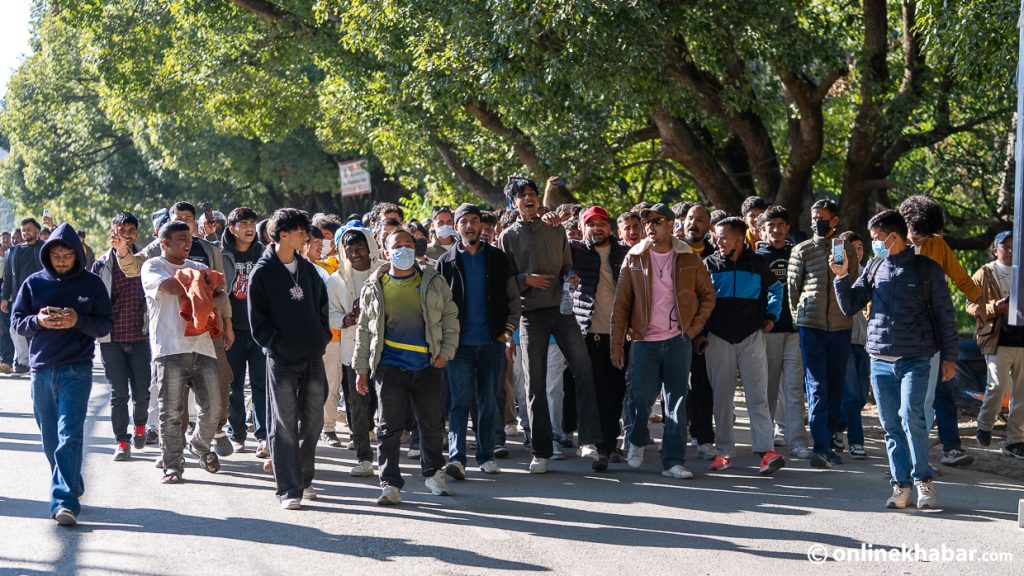
Fans who missed out on tickets for Saturday's Nepal Premier League final returned to the Tribhuvan University International Cricket Ground in Kirtipur on Saturday, protesting for a second day. They gathered outside the ground hours before the final between Lumbini Lions and Sudurpaschim Royals, due to start at 5:00 PM NST, and raised slogans against the cricket association's officials, including a call to stop black marketing. Police were deployed in large numbers outside the ground as the crowd built, a day after the same gate had seen the first protest over a ticket sale that appeared to end before it had begun.
A second day at the gate
The return of the protesters is what turns Friday's anger into a running story. A one-day gathering could have been written off as the frustration of a single afternoon. A second day, with the same slogans and a heavier police presence, shows that the explanations offered so far have not settled the matter for the supporters who were left without tickets. The final is the biggest match of the season, between the defending champions and a side chasing a first title after two defeats in the final, and the crowd outside the gate made clear that they had not come only to complain about missing a match. They had come to ask how the tickets for it were sold.
The protest on Saturday followed the same pattern as Friday's, only louder. Supporters who had failed to buy a ticket gathered at the gate of the ground in Kirtipur and raised slogans against the cricket association's officials, accusing the sale of lacking transparency. Photographs from the ground showed the crowd outside the gate, with supporters holding their phones up and talking among themselves, while police stood between the protesters and the entrance. The demand was the same one the crowd had made on Friday: a clear account of what happened during the sale, and an answer to the question of how a sale scheduled for 1:00 PM could already look finished at 12:57 PM.
The slogans gave the protest its sharpest edge. The call to stop black marketing was aimed directly at the fear that has run through the argument since Friday: that tickets were bought up before the public sale, or held back to be resold at a higher price. Nobody has produced evidence that this happened, and the organisers deny it. But the slogan itself shows what the supporters believe, or at least what they suspect, and it is the suspicion that has kept the protest alive into a second day. A crowd that believed the official explanation would have gone home. This one came back.
Friday: the sale that ended before it began
The sale was scheduled to open at 1:00 PM on Friday, 20 November 2026. Instead, the ticketing platform was already showing the final as sold out at 12:57 PM, three minutes before the opening time. Supporters who tried to buy when the hour arrived found the purchase would not go through, and attempts at 1:01 PM failed as well. Screenshots of the sold-out message spread across social media through the afternoon, and the anger that had built online reached the ground within the hour.
By around 2:30 PM on Friday, about 50 supporters had reached the main gate of the ground, where they argued with police personnel who stood between the protesters and the entrance. Dozens of motorcycles were parked along the road leading to the university. The crowd had come looking for answers that had not appeared on the social media pages of the cricket association or the ticketing partner, and the gate was the only place they could put the question in person.
The captains' pre-final press conference, scheduled for 4:30 PM on Friday, started only at 5:40 PM. When it finally began, there was one extra face on the stage: the tournament director, seated between the two captains, there to respond to the questions about the tickets. By the time the press conference ended, the main gate was clear and the protesters had left. They had not got the tickets, and they had not got an answer they considered reasonable either. On Saturday, they were back.
The numbers behind the sell-out
The figures given by the two sides of the sale do not quite match, and the gap between them is part of the story. The cricket association said about 200,000 users tried to buy tickets at the same moment when sales opened, causing a flood of simultaneous requests that the system could not handle smoothly. The ticketing partner's marketing officer put the figure far higher, at 400,000 to 500,000 users trying at once. Both sides agree on the outcome: every ticket was gone within about 25 minutes of the 1:00 PM opening, with the last ticket sold roughly 24 minutes after sales began.
The arithmetic of the sale explains why so many supporters never stood a chance. The ground holds about 10,000 people. The stands on the side facing the university, with a capacity of about 8,000, were the ones on sale, and around 6,000 tickets were sold for them. The stands on the far end, which can seat about 2,000, were not sold at all. With each buyer allowed up to five tickets, and buyers taking three tickets on average, only a few thousand successful buyers were needed to clear the entire allocation. Against 200,000 people trying at once, or 400,000, the odds were always going to be brutal. That is the organisers' case, and on the numbers alone it is a strong one.
But the same numbers raise a question the organisers have not yet answered in full. If about 2,000 seats on the far end were never put on sale, why were they left out while thousands of supporters were locked out of the match? The capacity explanation covers why the sale ended quickly. It does not cover why the ground will not be full for the biggest match of the season. Supporters who could not buy a ticket will keep asking that question until somebody answers it.
What the organisers say
The cricket association issued a notice on Friday evening. It said about 200,000 users had tried to buy tickets at the same moment, that tickets were limited by the capacity of the ground, and that every ticket was gone within a few minutes of the opening. The association apologised for the inconvenience caused to supporters, thanked them for their support of Nepali cricket and the league, and asked those who could not buy a ticket to follow the final through online and official platforms. The ticketing partner shared the same notice on its own social media pages.
The tournament director went further at the press conference. He said hundreds of thousands of users had been waiting to buy tickets, and he laid out the capacity figures for the ground. Then he addressed the suspicion directly. He said the organisers were confident there had been no black marketing. It was the clearest denial yet, delivered in front of the two captains, an hour after the association's notice had gone out.
The ticketing partner's chief executive gave the fullest account of what happened inside the system. He said the last ticket was sold 24 minutes after sales opened at 1:00 PM, and that the system worked on a first-come, first-served basis. He said it was natural for supporters to be frustrated, because only a small number of people managed to get tickets while most were unable to. He also said the two sides had coordinated, with the association issuing the official statement. The marketing officer added that the sale could not have opened on Thursday evening, as some supporters had expected, because the finalists were not yet confirmed and the association had not given permission to open sales.
The explanation for the 12:57 PM sold-out display is a technical one. Tickets are loaded onto the system from the association at around 12:57 PM, and before the 1:00 PM opening a feature in the system has to be restarted. For a few seconds during that restart, the platform shows sold out, and a screenshot of that moment spread among supporters. The sale itself, on this account, ran from 1:00 PM to about 1:24 PM before every ticket was gone.
The questions that remain
None of this has ended the argument, and the second day of protests is the proof. The speculation that filled the gap on Friday has not gone away: that somebody hacked the system and bought the tickets, that the platform sold them deliberately to resell them at a higher price, or that the association supported the platform in doing so. These are suspicions raised by supporters, not findings, and no evidence has been produced for any of them. But they have not been answered with evidence either. A denial, however firm, is not the same as an account that supporters can check for themselves.
The most basic question is still the one from Friday afternoon: why does a system built for a final show sold out at the exact moment everyone is watching? A restart that lasts a few seconds is a small fault, but it happened at the worst possible time, and it confirmed for thousands of supporters what they already feared. The organisers have explained the fault. They have not explained why a sale for the biggest match of the season was left exposed to it, or what will change before the next big sale.
There is also the matter of the unsold seats. Around 2,000 places on the far end of the ground will sit empty on Saturday evening while the supporters who protested outside the gate watch from home. The organisers have said those stands are not sold. They have not said why, or whether the decision could have been revisited once the scale of the demand became clear. Until that is answered, the protest will have a second grievance to feed on, alongside the first.
No inquiry into the sale has been announced, and no extra tickets have been released. The association has apologised and asked supporters to watch online. The ticketing partner has said the sale followed the agreed procedure. For the supporters outside the gate on Saturday, that is not enough, and the slogans they raised said so plainly. The argument will not end with the final whistle. It will end when somebody shows, in detail, how the tickets were sold, and what will be different next time.
The final goes ahead tonight
The match itself has not moved. Lumbini Lions, the defending champions, meet Sudurpaschim Royals at 5:00 PM NST on Saturday, 21 November 2026, at the TU International Cricket Ground in Kirtipur. Lumbini reached the final by beating Sudurpaschim by six wickets in the first qualifier on Tuesday, 17 November, their second straight final. Sudurpaschim answered two days later, beating Chitwan Rhinos by three wickets in the second qualifier on Thursday, 19 November, to reach a third straight final and set up the rematch.
Lumbini are chasing back-to-back titles. Sudurpaschim are chasing a first title after losing the finals of the first two seasons. The two captains, Rohit Kumar Paudel and Dipendra Singh Airee, have both said the results of the season so far will count for nothing once the final begins. The match is the one the season has been building towards, and it will be played in front of a crowd that filled the ground's saleable seats in about 25 minutes.
Supporters who could not buy a ticket can still follow the final live on television in Nepal and through the league's online stream. The match starts at 5:00 PM NST, and the broadcast will carry the whole game. For the final, general tickets were priced at Rs 1,000 and premium tickets at Rs 2,000, and supporters still hoping to attend should buy only through the official ticketing partner. Any ticket offered through other channels carries no guarantee that it is genuine.
The final will decide the champions of the third season. The ticket row will decide something else: whether the evening is remembered for the cricket, or for the crowd that was left outside the gate. The supporters who returned on Saturday have made their answer clear. They will be watching, but they will not be forgetting.
FAQs
Why did fans protest at the TU Ground again on Saturday?
Fans who could not buy tickets for Saturday's NPL final returned to the TU Ground in Kirtipur on Saturday, 21 November 2026, protesting for a second day. They raised slogans against the cricket association's officials, including a call to stop black marketing, and demanded transparency in how the final's tickets were sold.
How fast did NPL final tickets sell out on Friday?
Final tickets were due to go on sale at 1:00 PM NST on Friday, 20 November 2026, but the platform already showed sold out at 12:57 PM, three minutes early. The sale itself ran from 1:00 PM, and the last ticket was sold about 24 minutes later, within roughly 25 minutes of the opening.
What have the organisers said about the ticket sale?
The cricket association said about 200,000 users tried to buy at once and tickets were limited by the ground's capacity, and it apologised for the inconvenience. The tournament director said there had been no black marketing, and the ticketing partner said the sale ran on a first-come, first-served basis.
How can fans watch the NPL final without a ticket?
The final between Lumbini Lions and Sudurpaschim Royals is on Saturday, 21 November 2026, at 5:00 PM NST at the TU International Cricket Ground in Kirtipur. Supporters without a ticket can watch live on television in Nepal and through the league's online stream.
Comments