
Quick Facts
- Final
- Lumbini Lions vs Sudurpaschim Royals, Saturday, 21 November 2026, 5:00 PM NST, TU Ground, Kirtipur
- Fapla plan
- 50,000-seat international stadium and sports village, Dhangadhi Sub-Metropolitan City-3, 38 bigha
- Cost
- About Rs 26 billion in total; Rs 11 billion for phase one, including a 25,000-seat stadium
- Paperwork
- Detailed project report ready, environmental impact assessment approved
- History
- Fapla hosted the Dhangadhi Premier League in 2073 BS, the country's first franchise competition
- Wider picture
- Five stadiums listed as under construction: Morang, Chitwan, two in Dang and Fapla in Kailali
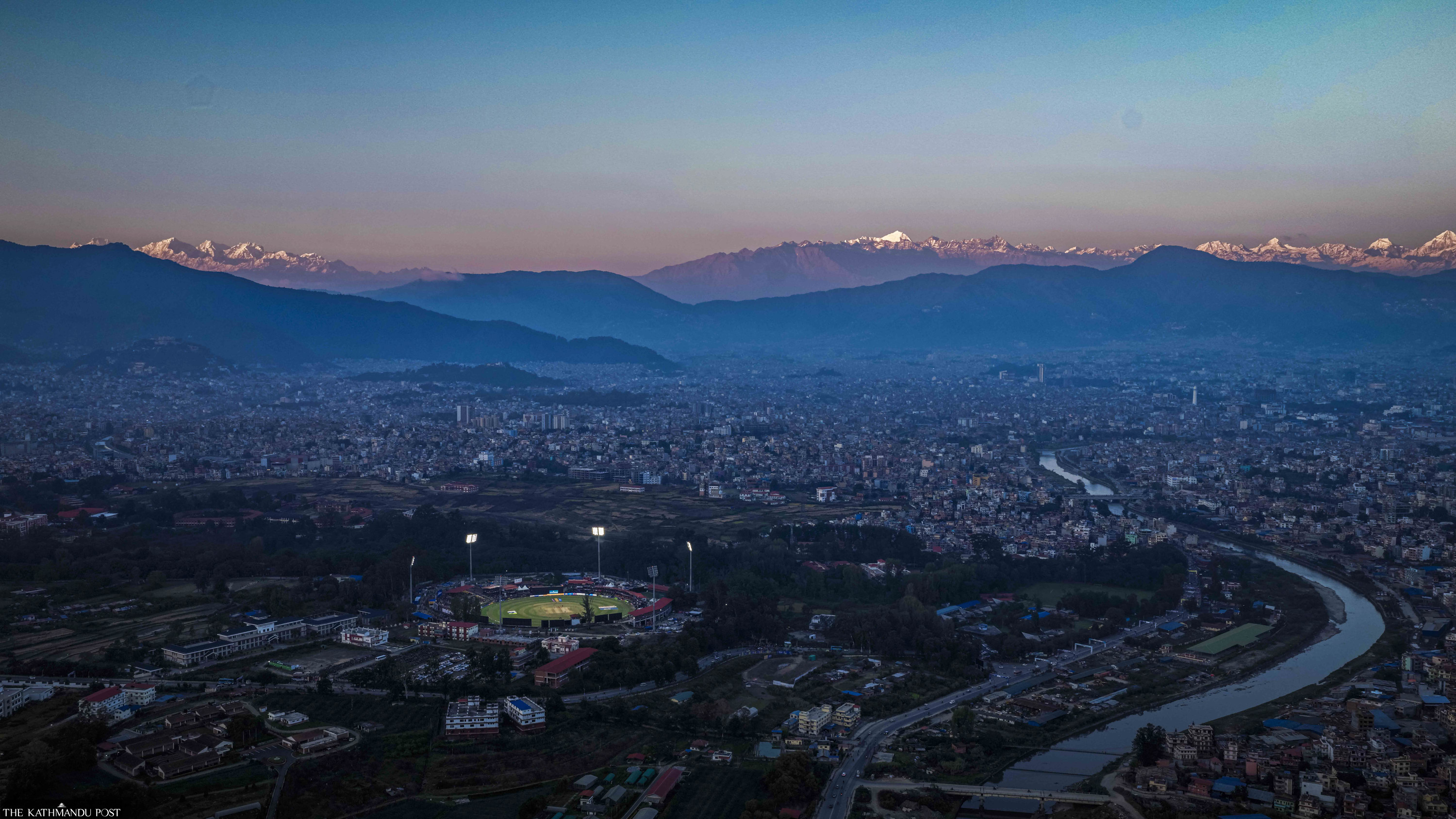
Kathmandu is counting down to Saturday's Nepal Premier League final, and the TU Ground in Kirtipur will be full again. In Dhangadhi, meanwhile, the ground that was supposed to end that one-city story is still waiting. The Fapla International Cricket Stadium, a 50,000-seat ground with a sports village around it, remains a plan rather than a place to play. Its detailed project report is ready, its environmental clearance is approved, and ministers have walked the site and promised to give it priority. What it does not have, after nearly a decade of talk, is the money and the start of construction.
A 50,000-seat plan on 38 bigha
The proposal is ambitious by any measure. On 38 bigha of land in Dhangadhi Sub-Metropolitan City-3, the plan calls for an international cricket stadium holding 50,000 spectators, surrounded by a multipurpose sports village. The total cost is estimated at about Rs 26 billion. The first phase alone would cost Rs 11 billion, and within it a 25,000-seat stadium would be built at an estimated cost of about Rs 6 billion. The land has been allocated, the project has been included among national priority projects, and the two big technical steps are done: the detailed project report has been prepared and the environmental impact assessment has been approved by the Ministry of Forest and Environment. On paper, there is almost nothing left to clear. On the ground, the work has not started.
The wait is not new. Fapla has been talked about for nearly a decade, and its roots go back further than the league itself. In 2073 BS, the ground hosted the Dhangadhi Premier League, the country's first franchise cricket competition, played there because Dhangadhi had no proper cricket ground of its own. A campaign to turn Fapla into an international stadium grew out of that tournament, and a 3D design of the proposed stadium was released as far back as 2016. The man who has carried the campaign longest, Subash Shahi, chairs the committee set up to build the stadium and sports village. The ground today has green turf and some concrete seating taking shape, and it hosts domestic tournaments. The international stadium around it is still a drawing.
Promises on the record
No one in government disputes that Fapla matters. After taking office, the minister for education, science and technology and youth and sports, Sasmit Pokharel, visited the site with the infrastructure development minister, Sunil Lamsal, and both promised to give the project priority. Pokharel returned to the ground in April for an on-site inspection, confirmed that land acquisition, the detailed project report and the environmental impact assessment were all complete, and said the project was now in the National Project Bank, with the focus turning to budget allocation and swift implementation. The chief minister of Sudurpaschim Province, Kamal Bahadur Shah, has said the provincial government has given the project high priority and will press the federal government for additional budget. In the budget for fiscal year 2083/84, the finance minister, Dr Swarnim Wagle, announced that the design of the Fapla stadium would be reviewed and an investment modality prepared.
Each of those statements is real, and each of them is now months old. The design review and the investment modality are the next steps the budget promised, and until they produce a funding decision, the stadium cannot move from design to tender. The committee has said the project is ready to proceed to construction, with an international tender to follow. What has not arrived is the certainty about who pays, and how. That is the gap the latest reports keep returning to: every technical process complete, every political promise made, and still no construction.
Work next door, waiting at the main gate
Something is being built beside Fapla, and the contrast is hard to miss. With private investment, construction has begun on a smaller ground near the Fapla site, on five bigha of land, with six pitches and boundaries of 65 to 75 metres built to international standards. The foundation stone has been laid, wall construction and ground levelling are complete, and pitch construction has begun under curator Madhav Pathak, who prepared the Extratech Oval in Rupandehi. The plan is phased: pitches with irrigation and drainage first, then a pavilion, changing rooms and a net practice area, then a parapet, floodlights and food corners outside the ground.
That ground is not the stadium. It is a separate, smaller venue, built by private investors including Shahi himself, and it is meant to give Dhangadhi a working cricket ground while the big project waits. Its progress shows what can move quickly when the funding is in hand. It also shows, by comparison, what is stuck: the 50,000-seat stadium needs a public decision on money that no private ground of five bigha has to wait for.
Three seasons, one ground
Saturday's final underlines the point. Every match of every season of the league has been played in Kirtipur, on the outskirts of Kathmandu, for three years. The teams carry the names of provinces, but none of them has played at home. Last season, Sudurpaschim Royals supporters travelled from Mahendranagar by a reserved bus to watch their team play a home game in someone else's city. They will travel again on Saturday, when the Royals meet Lumbini Lions for the title, the third straight final for Sudurpaschim and the second straight for the defending champions.
Kirtipur itself has been improved rather than replaced. A first phase of upgrades added 10,000 seats and floodlights, and the government has approved a Rs 10 billion master plan to take seating capacity to 30,000. But the ground sits on university land, and the lease has run out. Tribhuvan University, citing disruption to classes, refused in the spring to renew it, and a new arrangement is still being negotiated. Five stadiums are listed as under construction elsewhere in the country: in Morang, in Chitwan, two in Dang and at Fapla in Kailali. Mulpani, just across the Valley, has been under construction for years, and the cricket association has asked the government to hand that ground over, saying private investors are ready to build it out. The administration has not made a move yet.
The league has grown faster than its grounds. Revenue rose from Rs 276.9 million in the first season to Rs 473.6 million in the second, and each franchise received Rs 20.23 million as its share of the second season's profits. This season, 59 overseas players from 16 countries signed up, among them David Warner, Andre Russell and Moeen Ali, while the average spend per team is projected at about Rs 150 million. The crowds have followed the cricket, and the youngest fans have become the loudest part of it. What has not grown at the same speed is the number of places where the cricket can be played.
Why it matters beyond one final
A home ground is not only a matter of pride. Without home grounds there are no home games and few local sponsors, and the cost of moving teams, officials and equipment stays concentrated on one venue. The pitches feel it too. Kirtipur now has eight pitches, but they still carry more than 30 matches in four weeks, often two a day, and as of last week the average first-innings powerplay produced 43 runs. Spreading matches around the country would help the pitches as much as the fans. The Dhangadhi and Pokhara Premier Leagues have already shown that franchise cricket draws crowds outside the Valley, and the Royals' following in the far west is the clearest evidence of it.
There are models for how it could work without waiting for every province to have a finished stadium. South Africa's SA20 gave each of its six teams a home ground, and crowds returned to domestic cricket. The Caribbean Premier League took a different route, travelling as one caravan with all six teams, the television crew and the tournament staff moving together and staying longer in each host country. Neither model can be copied wholesale, and the roads, air links and weather that make moving a tournament around Nepal difficult are real. But a phased approach is possible, and the law for it already exists in the Public-Private Partnership and Investment Act of 2019. One version of it is straightforward: a province leases public land to a franchise, a concessional loan covers part of the construction, and in return the franchise commits to a fixed number of home matches each season and opens the ground to school and district cricket for the rest of the year.
For now, though, Saturday will look like the last three seasons. The final will be played in Kirtipur, the stands will be full, and the Royals' supporters will have made the long journey from home to watch their team chase a first title. The question hanging over the occasion is the one the reports from Dhangadhi keep asking: how many more finals will be played in Kathmandu before the ground that was promised to the far west is finally built? The paperwork is done, the design is drawn, and the money is the only thing missing.
What happens next
The immediate next step is the one the budget announced: a review of the stadium design and the preparation of an investment modality. Until that produces a funding decision, the tender process cannot begin. The committee has said it is ready, the provincial government has said it will keep pressing for budget, and the ministers who visited the site have said the project is a priority. The final on Saturday will not settle any of that. It will, however, put the contrast in front of a full house one more time: a league that has found its fans across the country, and a stadium for those fans that is still waiting to be built.
FAQs
When will the Fapla stadium be built?
No date has been announced. The detailed project report is ready and the environmental impact assessment is approved, but construction cannot begin until funding is secured. The budget for fiscal year 2083/84 promised a review of the stadium design and the preparation of an investment modality, which is the next step before tenders can be invited.
What will the Fapla stadium cost, and how big will it be?
The full plan is a 50,000-seat international stadium with a multipurpose sports village, estimated to cost about Rs 26 billion. The first phase would cost Rs 11 billion and deliver a 25,000-seat stadium, with about Rs 6 billion of that going to the stadium itself. The site covers 38 bigha in Dhangadhi Sub-Metropolitan City-3.
Why is the NPL final in Kathmandu instead of Dhangadhi?
Every NPL match in all three seasons has been played at the TU Ground in Kirtipur, because no venue outside Kathmandu is ready to host the league. Five stadiums are listed as under construction, including Fapla in Kailali, but none is finished. The final is on Saturday, 21 November 2026, at 5:00 PM NST, between Lumbini Lions and Sudurpaschim Royals.
Which stadiums are being built outside Kathmandu?
Five stadiums are listed as under construction: in Morang, in Chitwan, two in Dang and at Fapla in Kailali. Mulpani, just across the Valley from Kathmandu, has been under construction for years, and the cricket association has asked for it to be handed over so private investors can finish it. Work on the Gautam Buddha stadium in Chitwan has also slowed.
Comments