
Quick Facts
- Press conference
- 17 October 2026, Tribhuvan University International Cricket Ground, Kirtipur
- Announced by
- Paras Khadka, CAN secretary
- NOC rule
- Mandatory for all foreign players, including retired internationals
- 6-month ban
- Players in unsanctioned tournaments within 6 months ineligible
- Anti-corruption
- ICC Anti-Corruption Code strictly enforced throughout tournament
- ICC review
- CAN must submit review report within 60 days of tournament end
Foreign players heading to the Nepal Premier League will face stringent new requirements this season, with the Cricket Association of Nepal confirming that ICC sanction comes with mandatory No Objection Certificates, a six-month ban on unsanctioned cricket, and full anti-corruption enforcement.
The announcement
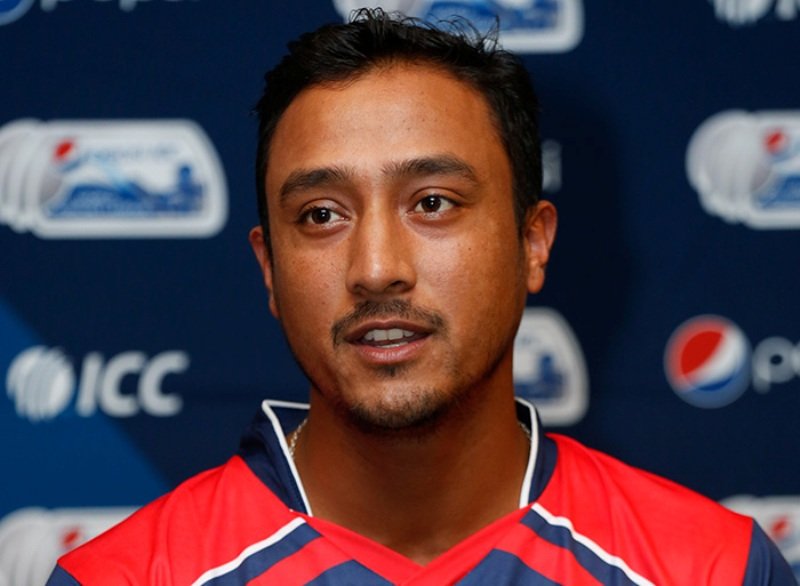
Cricket Association of Nepal secretary Paras Khadka laid out the ICC's conditions at a press conference on 17 October 2026 at the Tribhuvan University International Cricket Ground in Kirtipur — the venue that will host all 32 matches of the third NPL edition from 26 October to 21 November.
According to Khadka, CAN received the ICC's conditions by email and has formally accepted all of them. The sanction, he stressed, applies specifically to the 2026 tournament. "We have to submit the review report of this competition within 60 days after the third edition ends," Khadka said, as reported by Nepal Samaj and myRepublica.
The conditions mark a new era of professionalism for the NPL. After two unsanctioned editions, the league now operates under cricket's global governing body — and with that recognition comes accountability.
NOC mandatory for everyone
The headline requirement is the No Objection Certificate. Under the new rules, any foreign player participating in the tournament must obtain an NOC from their respective national cricket board. Crucially, this extends to retired internationals — a category that includes several of the NPL's marquee signings.
"Foreign players who have retired from international cricket will need to get a mandatory NOC from the cricket board of their respective country to play in the NPL," Khadka said. The rule is designed to prevent contractual disputes and maintain transparency across franchise operations, according to ICT Frame's detailed breakdown of the five ICC requirements.
With franchises permitted to register up to eight overseas players this season — up from previous limits — the NOC process represents a significant administrative task. Each of the eight teams must ensure every foreign signing has proper clearance before the 26 October start.
Six-month unsanctioned cricket ban
Perhaps the strictest condition is the eligibility bar on recent playing history. Under ICC provisions, players who participated in any illegal or unsanctioned cricket tournaments within the six months before the NPL begins are not eligible to compete.
"Players who have participated in tournaments not approved by the ICC or the relevant cricket board within six months before the start of the NPL will not be eligible to play in this season," Khadka confirmed. As ICT Frame explained, domestic competitions must have official ICC recognition and home board approval — any tournament lacking these is classified as unapproved cricket.
This rule could have real consequences for squad planning. Franchises that have already announced overseas signings will need to verify their players' recent playing history, and any star who turned out in a rebel or unrecognised league since late April 2026 faces exclusion.
Anti-corruption enforcement
With significant financial investment flowing into the league — including the Rs 33.53 crore media and ticketing rights deal — integrity is paramount. Khadka confirmed that the ICC Anti-Corruption Unit's rules will be strictly enforced throughout the tournament to prevent match-fixing, spot-fixing and other forms of corruption.
"To prevent potential irregularities in franchise cricket, the ICC Anti-Corruption Unit's rules will be strictly enforced," Khadka said. While Nepal is working toward introducing separate domestic legislation to address corruption in sport, investigations and disciplinary proceedings during the NPL will follow the ICC's code.
Khadka urged players and franchise owners to uphold the highest standards of professional conduct, a message carried by Nepal on the Web and Desh Sanchar. CAN is deploying dedicated anti-corruption units, oversight mechanisms and investigative resources for the tournament.
What it means for Season 3
The conditions underscore how seriously the ICC is taking its first sanctioned NPL. The 60-day post-tournament review means CAN's handling of everything — from NOCs to anti-corruption to DRS implementation — will determine whether future editions receive the same backing.
For fans, the rules should mean a cleaner, more credible tournament. The playing XI requirement of seven Nepali players and four foreigners remains, ensuring local talent stays central. DRS preparations have reached their final stage, with a decision expected imminently. Technical clarification on the NPL's official T20 status was expected from the ICC early in the week following the press conference.
Season 3 begins on 26 October with defending champions Lumbini Lions facing two-time runners-up Sudurpaschim Royals at Kirtipur — under the strictest regulatory framework the NPL has ever operated under.
FAQs
Do all foreign players need an NOC for NPL Season 3?
Every foreign player signed by an NPL franchise — including those retired from international cricket — must obtain a No Objection Certificate from their respective national cricket board before playing in Season 3.
What is the 6-month unsanctioned cricket rule?
Under ICC provisions accepted by CAN, any player who participated in illegal or unsanctioned cricket tournaments within the six months before the NPL begins is not eligible to compete in Season 3.
How will corruption be prevented in NPL Season 3?
The ICC Anti-Corruption Unit's rules will be strictly enforced throughout the tournament to prevent match-fixing, spot-fixing and other corruption. While Nepal works on separate legislation, investigations during the NPL will follow the ICC's code.
Does the ICC sanction cover future NPL seasons?
The ICC sanction applies specifically to the 2026 tournament. CAN must submit a review report within 60 days of its completion, after which the ICC will review the competition and CAN must continue the application process for future editions.