
Quick Facts
- Champions
- Sudurpaschim Royals, maiden title at the third attempt
- Final result
- Lumbini Lions 155/6; Sudurpaschim Royals 158/0 in 13.3 overs, won by 10 wickets, 21 November 2026
- Player of the final
- George Munsey, 125 not out off 54 balls
- Player of the tournament
- Dipendra Singh Airee, Rs 500,000
- Emerging player
- Rahul Yadav, 16, Janakpur Bolts, 12 wickets in 7 games
- Leading Nepali run-scorer
- Lokesh Bam, 242 runs in 7 games
- Prize money
- Winners Rs 15 million, runners-up Rs 8 million
Sudurpaschim Royals finally have their trophy. On Saturday night, 21 November 2026, under the floodlights of the TU International Cricket Ground in Kirtipur, the Royals chased down 156 without losing a wicket and ended two years of final heartbreak in 13.3 overs of controlled fury. George Munsey's unbeaten 125 off 54 balls was the innings the season deserved, and the third edition of the Nepal Premier League, which began on 26 October, closed as the biggest, loudest and most argued-over month in Nepali cricket. It was a spectacle. It was also a reality check.
A month the country watched
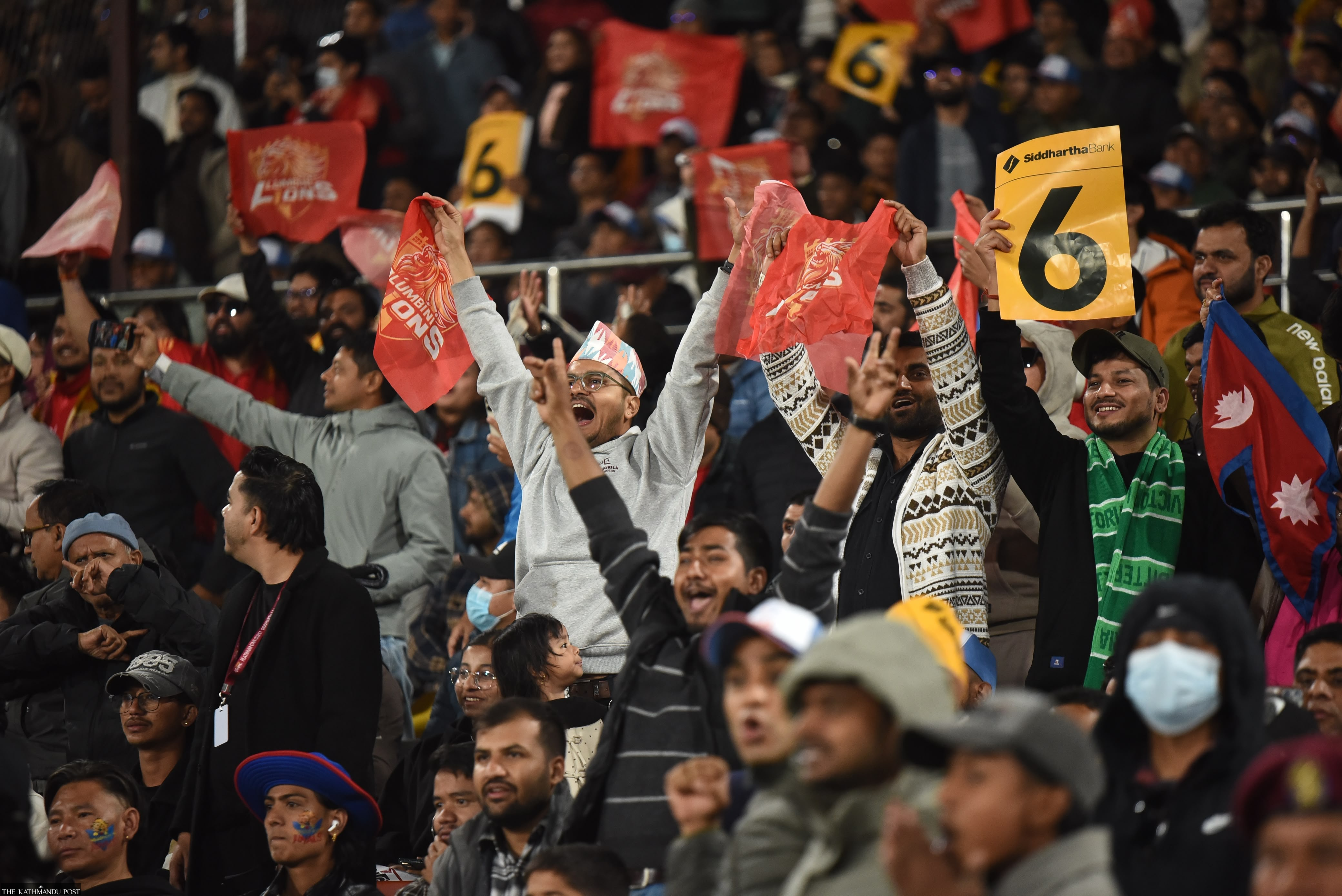
For four weeks, the TU Ground was a festival ground. The tournament's billing as a festival of the Himalayas held up in the stands, where crowds packed in night after night and thousands more followed from Dhangadhi and every other corner of the far west. The final itself was played in front of a ground filled beyond its seats, with supporters occupying stairways and every gap they could find, and the loudest cheer of the night came when Munsey reached his century off 49 balls with a boundary.
The cricket on show justified the noise. The league brought global names to Kathmandu and put them in the same dressing rooms as Nepali youngsters: Australian opener David Warner with Kathmandu Gorkhas, South African David Miller, Caribbean power-hitter Andre Russell, Bangladeshi star Shakib Al Hasan and English all-rounder Moeen Ali among them. The league carried ICC sanctioning, an expanded overseas quota, the Decision Review System and upgraded broadcast standards, and it drew sponsorship and viewing figures no earlier season had approached.
Local players decided it
The most encouraging thread of the season was that the matches were so often decided by Nepali players rather than by the overseas names on the team sheets. Kathmandu Gorkhas captain Karan KC said it plainly after his side chased down 181 against Karnali Yaks on 2 November, a win built by Rashid Khan's half-century and his own 44 off 20 balls after Warner had fallen for 16 on debut. He did not believe foreign players would win matches for his side, he said, and the seven domestic players in the team were the ones he trusted to do it. Monday backed him up: the chase was finished by local players.
Rohit Paudel carried Lumbini Lions to a second straight final, and Dipendra Singh Airee led Sudurpaschim Royals to the title and was named player of the tournament. The batting charts told the same story from the other end: Lokesh Bam finished as the leading Nepali run-scorer with 242 runs in seven games, while the Canadian youngster Yuvraj Samra topped the tournament with 294 runs in only four games for Pokhara Avengers.
The brightest discovery of the season was a 16-year-old. Rahul Yadav, a right-arm medium pacer from Chapur in Rautahat, reached Janakpur Bolts through a talent hunt in Madhesh Province that drew 446 aspiring players. He took a wicket with his very first ball in the league, against Karnali Yaks, and then took four wickets against Kathmandu Gorkhas to win the player of the match award as the crowd chanted his name. He finished the season with 12 wickets in seven games and was named the emerging player of the tournament. A league that can find a player like that in an open trial is doing something right.
The final and the awards
The final itself was one-sided in a way few expected. Lumbini Lions, batting first, posted 155 for 6, with contributions spread across the order: Dilip Nath made 39 off 31, Rohit Paudel 30 off 31, Niroshan Dickwella 28 off 17 and Ali Sheikh 24 off 12. It looked a defendable total, and history was against the chase: Lumbini had bowled Sudurpaschim out for 87 in the season opener and for 105 in Qualifier 1, and had beaten them by six wickets in last season's final after bowling them out for 85.
Munsey settled it. The Scot had arrived as a replacement for his countryman Brandon McMullen for the playoffs, and had made a duck in Qualifier 1 and eight in Qualifier 2. In the final he hit the first ball of the chase, from Lumbini's best fast bowler Ruben Trumpelmann, for four, and never looked back. He finished with eight fours and 12 sixes, and brought up his hundred in 49 balls. Binod Bhandari stayed with him, unbeaten on 30 off 27, and the Royals won with 39 balls to spare. It was the third straight final for Sudurpaschim, after losing to Janakpur Bolts by five wickets in 2024 and to Lumbini by six wickets in 2025, and this time they did not let it slip.
The awards night underlined how much of the season belonged to the home players. Rijan Dhakal of Chitwan Rhinos walked away with a car as the best Nepali player of the season, a motorcycle as the leading Nepali wicket-taker and Rs 200,000 as the overall leading wicket-taker. Rahul Yadav collected a motorcycle as the emerging player. Dipendra Singh Airee took the player of the tournament prize of Rs 500,000, and the champions received Rs 15 million with the runners-up collecting Rs 8 million.
One ground, 32 matches, tired pitches
Beneath the noise, the third season exposed the problem the league can no longer put off. All 32 matches were played on one ground in Kirtipur, and by the end of the month the pitches were showing it. Senior overseas players spoke out publicly about surfaces they did not consider suitable for T20 cricket, with Jimmy Neesham's criticism of the TU pitches opening a debate that ran for the rest of the tournament and Ravi Bopara adding his voice to it. The strain was visible in the cricket itself: batting sides repeatedly lost early wickets in the six-over powerplay and spent the rest of their innings rebuilding instead of setting commanding totals.
The single-venue model is the league's oldest compromise. It keeps the tournament logistically manageable and the crowds concentrated, but it asks one square of pitches to survive a full month of professional cricket, and it leaves the rest of the country watching from a distance. The league outgrew that model in Season 3, and the pitches said so out loud.
Tickets and trust
The off-field pressure points were just as visible. Tickets for the final sold out within seconds of going on sale on Friday, and fans who missed out reached the TU Ground and protested, turning the biggest night of the season into a reminder that ticketing and crowd management have not kept pace with demand. Questions around sponsorship processes, ticketing logistics and broadcast rights enforcement, including crackdowns on unauthorised public screenings, ran through the season as the commercial stakes rose.
None of this diminishes what the players produced, but it sets the standard for what comes next. A league that sells out its final in seconds and draws global stars cannot afford to have its supporters queuing outside a locked gate or its administrators answering the same questions every season.
Building beyond Kirtipur
There was genuine good news on the infrastructure front as the season closed. On 20 November, the government invited bids for the first phase of construction at Fapla International Cricket Stadium in Dhangadhi, the long-promised home of the champions, with the bid security set at Rs 5.4 million and the first contract covering the filling and levelling of the ground and the construction of blocks in front of the pavilion. Work on roads around the TU Ground has also been contracted.
The prime minister, Balendra Shah, went further on the night of the final, announcing floodlit stadiums for all eight NPL clubs, built by the Ministry of Infrastructure Development, with the league switching to a home-and-away format from its sixth edition. Construction at Fapla has already begun, and the process for the other seven grounds is to start within three months. The announcement names a ground for every franchise, from Baijnathpur for Biratnagar Kings to Siddharth for Lumbini Lions and Surkhet for Karnali Yaks. Promises have been made before, and the test will be whether the first contracts turn into concrete before Season 4.
What comes next
The wider game is moving in Nepal's favour. The Marylebone Cricket Club has invited Nepal to tour England in June next year, with a one-off T20I against Bangladesh at Lord's and matches against Scotland and Ireland, and Test nations are increasingly willing to arrange series against Nepal, as the West Indies did last year. The players who lit up Season 3 will carry that momentum into those fixtures.
Three seasons in, the Nepal Premier League is no longer an ambitious experiment. It is the heartbeat of Nepali cricket, and it has shown the world what the game can look like when a whole country is watching. The challenge before Season 4 is to make the foundations match the noise: more grounds, better pitches, fairer ticketing and batting that can stand up to the new ball. The spectacle is proven. Now the league has to build the rest.
FAQs
Who won NPL Season 3?
Sudurpaschim Royals won the third season of the Nepal Premier League, beating defending champions Lumbini Lions by 10 wickets in the final at the TU International Cricket Ground in Kirtipur on 21 November 2026. It was the Royals' maiden title after losing the finals of the first two seasons.
Who was the player of the tournament in NPL Season 3?
Sudurpaschim Royals captain Dipendra Singh Airee was named player of the tournament and received a cash prize of Rs 500,000. George Munsey was player of the final for his unbeaten 125 off 54 balls, and Rijan Dhakal of Chitwan Rhinos won a car as the best Nepali player of the season.
What were the main criticisms of NPL Season 3?
The main criticisms were the condition of the pitches after 32 matches at a single venue, with senior overseas players speaking out publicly; final tickets selling out within seconds and fans protesting at the ground; and repeated top-order collapses in the powerplay across the tournament.
What happens next for NPL infrastructure?
The government invited bids on 20 November 2026 for the first phase of work at Fapla International Cricket Stadium in Dhangadhi, and the prime minister has announced floodlit stadiums for all eight NPL clubs with a home-and-away format from the sixth edition. Nepal also tours England in June 2027, including a T20I against Bangladesh at Lord's.
Comments