
Quick Facts
- Reaction
- Mofussil club owners welcome PM Balendra Shah's home-and-away announcement, published Monday 23 November 2026
- Karnali Yaks
- Chairman Grihendra Ghimire says playing before a home crowd is a long-held dream for Karnali residents
- Chitwan Rhinos
- Chairman Ayush Neupane says Gautam Buddha Cricket Stadium construction is in its final stages and floodlights will follow soon
- Home and away
- NPL switches to a home-and-away format from its sixth edition
- Builder
- Ministry of Infrastructure Development, Government of Nepal; Fapla under way, other seven within three months
- The eight stadiums
- Gautam Buddha (Chitwan Rhinos), Surkhet (Karnali Yaks), Baijnathpur (Biratnagar Kings), Siddharth (Lumbini Lions), Fapla (Sudurpaschim Royals), Kirtipur (Kathmandu Gorkhas), Pokhara (Pokhara Avengers), Ramjanki (Janakpur Bolts)
The loudest applause for the Prime Minister's home-and-away promise has come from outside Kathmandu. Two days after Sudurpaschim Royals lifted the Season 3 title at the TU Ground in Kirtipur, the club owners who have spent three seasons watching their teams play every single match in the capital welcomed the announcement that each of the eight franchises will get a floodlit stadium of its own, and that the league will switch to a home-and-away format from its sixth edition. For the districts that have supplied the players, the crowds and the noise while hosting none of the cricket, the promise lands as something more than an infrastructure pledge: it is the first time the league has been told it belongs to them too.
A welcome from the districts
Grihendra Ghimire, the chairman of Karnali Yaks, spoke for the far west when he said the long-held dream of Karnali residents, watching their team play in front of a home crowd with the warmth of their own supporters behind them, is now moving towards realisation. He called the initiative historic, and a milestone not only for sport but for infrastructure development, for the blossoming of hidden local talent, and for sports tourism across Karnali. His club, he said, is ready to move forward hand in hand with the Nepal Government, the provincial government, the Cricket Association of Nepal and every concerned body in the campaign to build an international-standard cricket stadium in Karnali and take Nepali cricket to new heights.
Ayush Neupane, the chairman of Chitwan Rhinos, welcomed the announcement with the same warmth and thanked the Prime Minister for it. Playing in their own city, in their own stadium, he said, is not a matter limited to the game itself. It is an opportunity for supporters to cheer their team from up close, to set the local economy moving, and to modernise the sports infrastructure of the region. He expressed confidence that the initiative will inspire local young talent, make training easier, and raise the sporting atmosphere across the whole province.
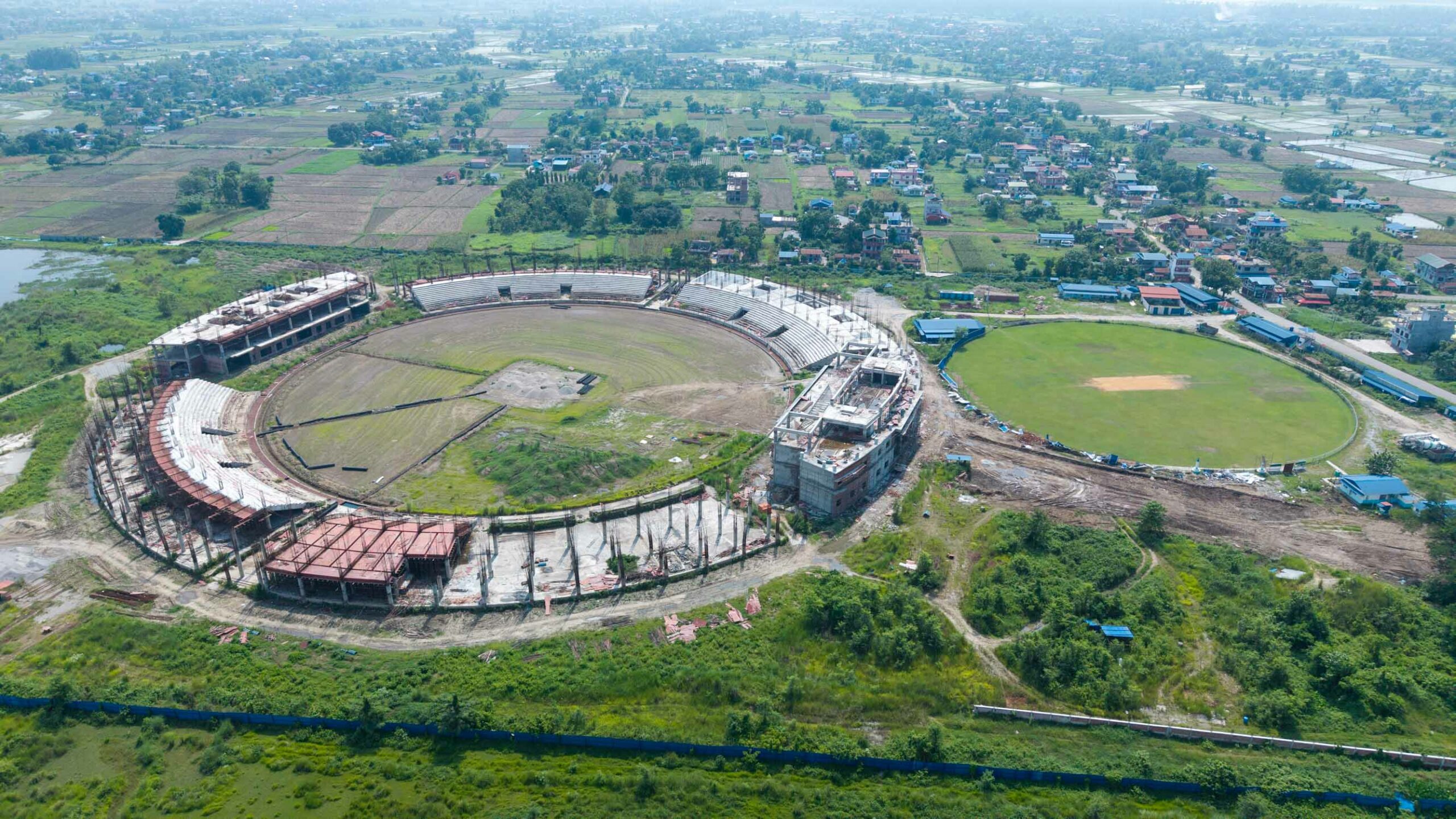
Neupane also brought the most concrete news in the reaction. The Gautam Buddha Cricket Stadium in Bharatpur, being built by Bharatpur Metropolitan City, has reached the final stages of construction, he said, and he is confident that floodlights will be installed soon. He expects cooperation from the Nepal Government, the provincial government, Bharatpur Metropolitan City, the Cricket Association of Nepal and all concerned bodies to make the national campaign a success, and he offered his club's full commitment to it.
What each club will get
The announcement itself names a home for every franchise. Chitwan Rhinos will get Gautam Buddha Cricket Stadium, Karnali Yaks will get Surkhet Cricket Stadium, Biratnagar Kings will get Baijnathpur Cricket Stadium, and Lumbini Lions will get Siddharth Cricket Stadium. Sudurpaschim Royals will get Fapla Cricket Stadium, Kathmandu Gorkhas will play at the Kirtipur Cricket Ground, Pokhara Avengers at Pokhara Cricket Stadium, and Janakpur Bolts at Ramjanki Cricket Stadium.
The stadiums will be built by the Ministry of Infrastructure Development, and the Prime Minister's message was explicit that each club will have a floodlit ground of its own. Work on Fapla Cricket Stadium, the home designated for Sudurpaschim Royals, has already begun, and the process for developing the other seven stadiums will be initiated within the next three months. The eight names turn a general promise into a list that supporters in each city can point to, and hold the government to.
Why home grounds matter beyond the boundary
The welcome from the districts is easy to understand once the shape of Season 3 is remembered. All 32 matches of the third edition were played at a single ground, the TU International Cricket Ground in Kirtipur, from the opening match on 26 October to the final on 21 November. The eight franchises represent eight cities, but for a month the entire league lived in one of them. A home-and-away format would change that completely: each franchise would host matches in its own city, supporters outside the capital would finally watch their team at home, and the league would spread across the country instead of concentrating in one venue.
The stakes are larger than convenience. A home ground gives a club a base to train on, a place to build an academy around, and a reason for young players in the district to believe the pathway runs through their own town. It gives a city a fixture list to plan around, hotels, transport, food stalls and fan parks, and it gives the league a way to grow its audience beyond the capital's capacity. The final itself showed how far demand has already outgrown a single ground: tickets for the decider sold out within minutes of going on sale, and the stands at the TU Ground were packed beyond their seated capacity. A league that fills one ground to overflowing needs more grounds, and the Prime Minister's plan answers that need by giving each club a venue of its own.
Two grounds already moving
Of the eight named stadiums, two already carry the weight of the story. The Gautam Buddha Cricket Stadium in Bharatpur is the ground Neupane says is nearly finished, and its completion would give Chitwan Rhinos the home their chairman describes as an opportunity for the whole province. The stadium has been a long-delayed project, and its arrival in the final stages of construction is the most tangible piece of progress in the whole announcement. Floodlights, Neupane says, will follow soon, the detail that turns a finished ground into a venue that can host the evening matches the league is built around.
The other is Fapla Cricket Stadium in Dhangadhi, where the construction process has already begun. For Sudurpaschim, the ground is the longest-running stadium project in Nepali cricket: its detailed project report is ready, its environmental clearance is approved, and the first phase is planned for 25,000 seats as part of a 50,000-capacity ground. The Royals won the title on Saturday; the promise that their home ground is finally moving gives the champions something concrete to take back to the far west.
The questions that remain
The welcome, though, comes with questions the announcement does not answer. No construction budget has been specified for the eight stadiums, and no completion deadlines have been given for the seven grounds beyond Fapla. The sixth edition, the first to be played home and away, is three seasons away, with the fourth and fifth editions still to be staged before the new format arrives. Whether the three-month window to start work on the remaining seven grounds holds, and whether the pace survives contact with budgets, land and procurement, will decide whether the promise is real or only a message sent on the day of a final.
There is also the matter of the earlier plan. Before the season began, the government had already outlined floodlit stadiums in eight major cities so the NPL could move to home and away, with each ground holding at least 8,000 spectators and construction aimed for completion within three years. The Prime Minister's announcement gives that outline what it lacked: named stadiums for named clubs, a named builder, a start on Fapla, and a firm format change from the sixth edition. The reaction from the districts suggests the clubs are ready to hold the government to it.
Why it matters now
The timing of the reaction matters as much as its content. It arrived as Season 3 closed, with the league's popularity repeatedly outrunning its infrastructure and with every match of the season staged on one ground because Nepal has no second venue ready for a tournament of this size. The chairmen of Karnali Yaks and Chitwan Rhinos did not merely welcome a promise; they offered their clubs' cooperation and commitment, named the governments and bodies they expect to work with, and pointed to grounds already under construction. If the stadiums follow, the next editions of the NPL will not all be played in Kirtipur, and the supporters who travelled to the capital for three seasons will finally watch their teams at home.
FAQs
What did the club owners welcome?
Prime Minister Balendra Shah announced that all eight Nepal Premier League clubs will get their own floodlit stadiums, built by the Ministry of Infrastructure Development, and that the league will switch to a home-and-away format from its sixth edition. Club owners outside Kathmandu, including the chairmen of Karnali Yaks and Chitwan Rhinos, have welcomed the announcement.
Which stadium will each NPL club get?
Chitwan Rhinos will get Gautam Buddha Cricket Stadium, Karnali Yaks will get Surkhet Cricket Stadium, Biratnagar Kings will get Baijnathpur Cricket Stadium, and Lumbini Lions will get Siddharth Cricket Stadium. Sudurpaschim Royals will get Fapla Cricket Stadium, Kathmandu Gorkhas will play at the Kirtipur Cricket Ground, Pokhara Avengers at Pokhara Cricket Stadium, and Janakpur Bolts at Ramjanki Cricket Stadium.
What did the Karnali Yaks chairman say?
Grihendra Ghimire, chairman of Karnali Yaks, said the long-held dream of Karnali residents to watch their team play in front of a home crowd is moving towards realisation. He called the initiative a milestone for sports, infrastructure development, local talent and sports tourism in Karnali, and said his club is ready to work with the Nepal Government, the provincial government and the Cricket Association of Nepal on an international-standard stadium.
What did the Chitwan Rhinos chairman say about Gautam Buddha Stadium?
Ayush Neupane, chairman of Chitwan Rhinos, said the Gautam Buddha Cricket Stadium in Bharatpur, built by Bharatpur Metropolitan City, has reached the final stages of construction and he is confident floodlights will be installed soon. He said playing at home will let supporters cheer the team up close, stimulate the local economy, inspire young talent and modernise sports infrastructure.
Comments