
Quick Facts
- The pattern
- A new Nepali bowling find in each of the three NPL seasons — and no new batting star in any of them
- Season 3 find
- Rahul Yadav, 16, Janakpur Bolts — 12 wickets in seven matches, leading the wicket chart
- Season 2 find
- Sher Malla, Lumbini Lions — 17 wickets in ten matches, joint-top wicket-taker
- Season 1 find
- Bipin Sharma, Karnali Yaks — 13 wickets in eight matches, Emerging Player
- Season 3 run chart
- Lokesh Bam leads with 227 runs; Pokhara's Yuvraj Samra is next with 205, including the season's only century
Three seasons of the Nepal Premier League have now told the same story three times over. Each year, a young Nepali bowler nobody had heard of walks in from outside the spotlight and bowls his way into the country's cricket conversation. And each year, the batting charts stay exactly where they were — topped by overseas stars and the same familiar Nepali names. The league keeps finding bowlers. It has not yet found a batter.
The three finds
The pattern started in the first season, in 2024, with Bipin Sharma of Karnali Yaks. He took 13 wickets in eight matches at an average of 13.15 and an economy of 5.90, with best figures of three for 17, and finished as his team's leading wicket-taker. He was named the Emerging Player of the tournament and took home a scholarship worth one million rupees. Nobody had arrived at the tournament talking about him. Everybody left it knowing his name.
A year later, Lumbini Lions' Sher Malla did the same thing, only louder. The right-arm off-break bowler from Dhangadi took 17 wickets in ten matches at 13.76, sharing the top of the wicket chart with Sandeep Lamichhane and Abinash Bohara, and he saved his best for last: three for 22 in the Eliminator, three for 31 in Qualifier 2 and three for 18 in the final as Lumbini lifted the title. He too was named the Emerging Player of his season, and he has since broken into the national side.
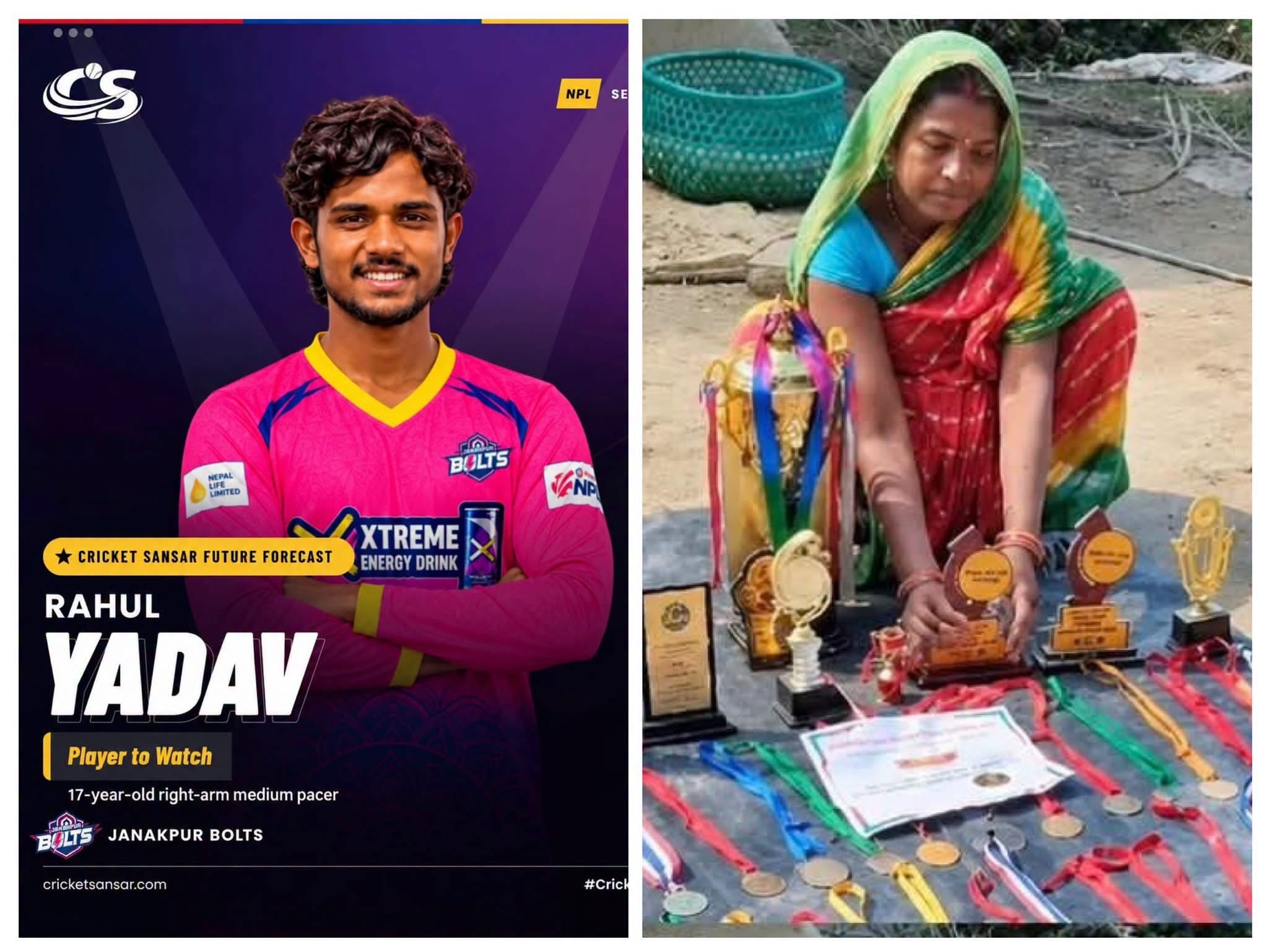
This season it is Rahul Yadav's turn. The 16-year-old from Janakpur Bolts leads the Season 3 wicket chart with 12 wickets in seven matches, at an average of 13.17 and an economy of 6.87, with best figures of four for 31. Three different seasons, three different teams, three different bowlers — and the same discovery, made again.
Rahul Yadav: sixteen and leading the wicket race
Rahul's story starts a long way from Kirtipur. He was born on 24 May 2010 in Chapur, in Rautahat, and he is a Class 9 student who has trained at the Chandrapur Cricket Academy for around three years. He came through a talent hunt Janakpur Bolts held in Chandrapur in October, where more than 446 players registered and around 200 took part in the on-field trials. Seven teenagers were picked for the franchise's development squad. On 25 October, Janakpur announced Rahul as its iconic player for the season.
Two days later he was in the playing eleven against Karnali Yaks, and he needed exactly one delivery to announce himself. Karnali opener Deepak Dumre had struck two sixes in the previous over when captain Harmeet Singh handed the 16-year-old the ball. Dumre tried to cut the first ball and dragged it onto his stumps. Rahul finished with two for 15 from four overs.
His second match was even better. Against a Kathmandu Gorkhas side packed with international names, he struck with the first ball of his spell again, removed both openers inside the powerplay, and then took two wickets in two balls in the 17th over to finish with four for 31. Kathmandu were bowled out for 115, Janakpur won by eight wickets, and Rahul was named Player of the Match. England all-rounder Moeen Ali, who shared a dressing room with him that week, said Rahul could become Nepal's next Lasith Malinga if he stayed fit and humble. Harmeet Singh called him very deceptive, and said batters facing him for the first time would struggle to read his opening deliveries.
The wickets have not stopped since. He took three for 19 against Chitwan Rhinos on 13 November, in the match that ended Janakpur's playoff hopes, and he now sits alone at the top of the Season 3 wicket chart. Janakpur's campaign is over — two wins and five defeats from seven matches — but their teenager's season has already done its job. The talent hunt that found him has been justified in a single month.
The batting charts tell a different story
Now look at the other side of the scorecard, and the contrast is hard to miss. In the first season, four of the five leading run-scorers were overseas players: Lahiru Milantha led the chart with 293 runs, followed by Ravi Bopara with 286, Rohit Paudel with 279, Saif Zaib with 275 and James Neesham with 247. Rohit was the only Nepali in the top five, and he was already the national captain. The other leading Nepali run-scorers that season — Binod Bhandari, Dipendra Singh Airee and Kushal Malla — were all established internationals too. No new Nepali batter announced himself.
The second season changed the names but not the shape. Adam Rossington of Pokhara Avengers topped the chart with 323 runs in seven innings, including a century. Rohit Paudel was next with 276 and Binod Bhandari third with 264. The overseas players filled most of the places behind them, and the Nepali names near the top were, again, the ones the country already knew.
Season 3 is following the same script. Biratnagar Kings opener Lokesh Bam leads the run chart with 227 runs in six matches, at a strike rate of 148.37 and with a highest score of 87. Behind him sits Pokhara's Yuvraj Samra with 205 runs in three matches, including 102 off 48 balls — the season's only century so far. Then come Kathmandu's Rashid Khan with 155, Karnali's Pawan Sarraf with 152 and Sudurpaschim captain Dipendra Singh Airee with 150. After 21 matches, seven of the top ten run-scorers were overseas players, and only three were Nepali. Bam is the exception that proves the pattern: a Nepali batter leading the chart, but one who was already a national-team wicketkeeper-batter before the season began.
The career numbers make the point even sharper. Rohit Paudel, with 555 runs across the first two seasons, is the leading run-scorer in NPL history. The league's batting records belong to players the country knew before the league existed. Its bowling records keep being rewritten by players it did not.
Why bowlers break through first
There are good reasons for the gap, and the first is the ground itself. Every NPL match is played at the Tribhuvan University ground in Kirtipur, and its pitches have favoured bowlers through all three seasons, with spinners finding particular help. A young bowler who lands the ball in the right areas gets rewarded quickly. A young batter facing the same pitch, under lights, against international bowling, has to survive first — and surviving is the hardest part of batting.
The second reason is the shape of a Twenty20 innings. A bowler's job is fixed and short: four overs, a clear plan, and a wicket or two can change a match. Rahul Yadav proved that twice in his first two games. A batter's job is open-ended. He has to score from the first ball, build an innings, read the match situation and still be there at the end — and he has to do it again and again before anyone calls him a find. One good spell makes a bowler. One good innings does not make a batter.
The third reason is opportunity. Teams trust their most important batting places to experienced overseas players, because those are the places that decide matches. A young Nepali batter usually gets a place lower down the order, where he faces fewer balls and has less time to build an innings. A young bowler, by contrast, can be handed the new ball in his very first match, exactly as Janakpur did with Rahul. The league gives its young bowlers the stage. It has not yet found a way to give its young batters the same stage.
What the batters can take from the bowlers
None of this means the batters are failing. It means the pathway is slower, and the league knows it. Bipin Sharma, Sher Malla and Rahul Yadav all arrived through the same door: a franchise willing to trust an unknown player with a real job, in a real match, and let the performance speak. Sher Malla's route even ran through a move between teams, from Janakpur in 2024 to Lumbini in 2025, before he became a title-winner. The lesson is not that Nepali batters lack talent. It is that talent needs the same trust — a regular place in the top order, a run of matches, and the freedom to fail once without losing the spot.
Lokesh Bam's season shows what happens when that trust is given. He has batted at the top for Biratnagar in every match, faced the new ball, and now leads the tournament's run chart. The next step is for a younger batter, one the country has not heard of yet, to be given the same chance and to take it the way Rahul Yadav has taken his.
Three seasons in, the Nepal Premier League has given Nepali cricket a new fast bowler, a new title-winning spinner and a new 16-year-old sensation. The bowling production line is working. The batting one is the challenge that remains — and it is the one the league will be judged on next.
FAQs
Who are the three Nepali bowling finds of the NPL?
Bipin Sharma of Karnali Yaks in 2024, with 13 wickets in eight matches; Sher Malla of Lumbini Lions in 2025, with 17 wickets in ten matches; and Rahul Yadav of Janakpur Bolts in 2026, with 12 wickets in seven matches. Each was named his season's breakout bowler, and the first two were named Emerging Player of their tournaments.
How many wickets has Rahul Yadav taken in NPL Season 3?
Rahul Yadav has taken 12 wickets in seven matches for Janakpur Bolts, leading the Season 3 wicket chart. His best figures are four for 31 against Kathmandu Gorkhas, when he was named Player of the Match, and he also took three for 19 against Chitwan Rhinos. He is 16 years old and made his debut on 27 October 2026, taking a wicket with his very first delivery.
Who leads the NPL Season 3 run chart?
Lokesh Bam of Biratnagar Kings leads the run chart with 227 runs in six matches, at a strike rate of 148.37 and with a highest score of 87. Pokhara Avengers batter Yuvraj Samra is second with 205 runs in three matches, including 102 off 48 balls, the season's only century so far.
Why have no new Nepali batters emerged from the NPL?
Three things work against them. The Kirtipur pitches favour bowlers, teams give their most important batting places to experienced overseas players, and batting needs a longer run of matches than bowling to prove itself. Young bowlers can change a match in four overs; young batters need regular chances at the top of the order, and those chances have been limited so far.
Comments