
Quick Facts
- The proposal
- Home-and-away NPL from two or three venues as early as the fourth edition, with matches at all eight clubs' home grounds by the fifth and sixth editions
- The meeting
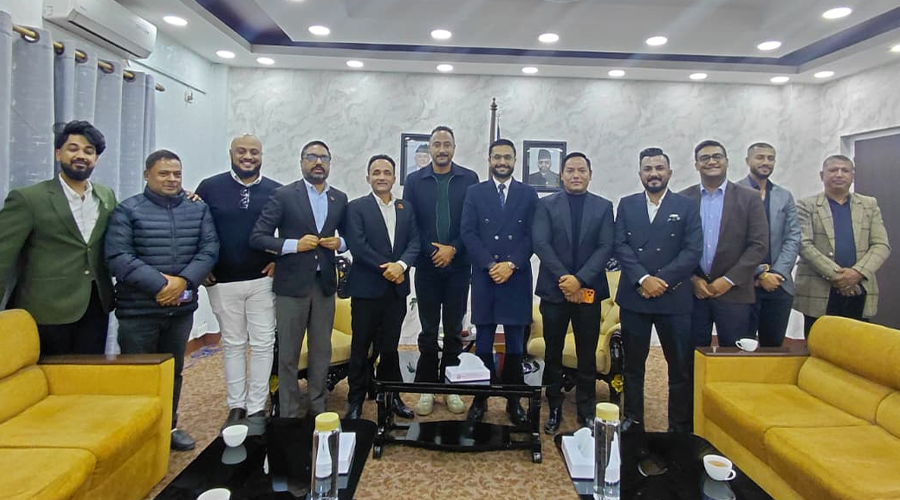
- Education and Sports Minister Sasmit Pokharel meets CAN Secretary Paras Khadka and representatives of all eight NPL franchises in Kathmandu, Tuesday 24 November 2026
- Three grounds first
- TU Cricket Ground in Kirtipur, Mulpani and Gautam Buddha Cricket Stadium in Chitwan could be ready within 10 months on a concessional budget, after revising their costly detailed project reports
- The model
- Government prioritises a public-private partnership, with clubs taking long-term leases and leading construction of their home grounds
The Nepal Premier League could leave its single home in Kirtipur far sooner than first announced. Education and Sports Minister Sasmit Pokharel has proposed playing the tournament in a home-and-away format from two or three venues as early as the fourth edition, rather than waiting until all eight clubs have their own floodlit grounds. The phased plan, put to the franchise owners in Kathmandu on Tuesday, would see matches spread to all eight home grounds by the fifth and sixth editions.
It is a sharp acceleration of the promise Prime Minister Balendra Shah made on Saturday, as Sudurpaschim Royals were lifting the third season's title. The prime minister said all eight teams would have their own floodlit home grounds from the sixth edition, so the league could finally be played home and away. The minister's proposal keeps that destination but brings the start forward: two or three grounds ready for the next season, the rest to follow over the two editions after that.
A phased start, not a big bang
The meeting at the ministry in Singha Durbar brought together the minister, Cricket Association of Nepal secretary Paras Khadka and representatives of all eight franchises. Its central question was how to turn the prime minister's announcement into something buildable, and the minister's answer was to stop thinking of eight stadiums as a single project. Building all eight at once, he argued, would take too long and cost too much. Starting with two or three, and proving the model works, would get the league out of Kirtipur while the rest of the grounds catch up.
The phased approach also answers the hardest practical problem in the plan. International-standard broadcasting, production and the Decision Review System keep costs high even when the league is played at one venue, and the meeting heard that fitting out all eight grounds with the full technology at once would be difficult. Rolling the grounds out gradually, starting with the larger cities, lets the league spread without asking for everything everywhere on the same day. That was already the conclusion of the high-level meeting the minister chaired on Monday, and Tuesday's discussion with the owners turned it into a timetable.
For supporters, the difference between the two timelines is the difference between waiting and watching. Under the prime minister's announcement, home matches were a sixth-edition prospect. Under the minister's proposal, the fourth edition could already have teams playing in front of their own crowds at two or three grounds, with the rest joining over the following two seasons. The plan is still a proposal, not a contract, but it is the first time a date earlier than the sixth edition has been attached to home matches.
Three grounds in ten months
The fastest part of the plan concerns three grounds the country already has. Khadka proposed revising the existing detailed project reports for the TU Cricket Ground in Kirtipur and for Mulpani, which he described as costly, and said the TU ground, Mulpani and the Gautam Buddha Cricket Stadium in Chitwan could be made ready within ten months on a concessional budget. Those three would form the first wave: Kirtipur is already the league's home, Mulpani is the capital's second ground, and Chitwan's Gautam Buddha ground has waited years for completion.
The suggestion from the franchise representatives went further. If the TU ground is put in order and the Mulpani and Chitwan stadiums are completed quickly, they said, the next season could have morning games at Mulpani and evening floodlit games at the TU ground. It is a modest vision next to eight new stadiums, but it is also one that could be delivered in months rather than years, and it would give the league two venues in its fourth season instead of one.
The clubs also pressed for the TU ground's spectator capacity to be expanded immediately for the next season. Three seasons of sell-out crowds at Kirtipur have made the ground's limits obvious, and the owners want the expansion done before the fourth edition rather than left to a wider stadium programme. They added that the clubs could cooperate with each other on building the other grounds, spreading the work rather than leaving every project to the government alone.
Who builds, and who pays
The meeting left the funding question clearer than it found it. The minister said the government is open to either a public-private partnership model or giving clubs long-term leases and handing them the responsibility for construction, and he told the owners the government would prioritise the partnership model and wants to work with the clubs on it. Club ownership, he said, would speed up construction and send a positive message to supporters. His message to the room was that the government would rather build with the clubs than with other private-sector players.
That suits the franchises. Their representatives said the private sector is ready to invest in building and running stadiums if the government provides a long-term policy framework, and they urged the government to attract foreign direct investment in sports infrastructure and to remove the policy hurdles around sponsorship. The clubs have spent three seasons watching their teams play every match in Kathmandu while their own towns supplied the players and the crowds, and they want the grounds to belong to them in more than name.
Before any of that happens, the meeting agreed on one piece of groundwork: a clear framework for sharing costs and revenue has to be drawn up before the move to a home-and-away system. Who pays for construction, who keeps the gate money, who funds the broadcasting and the review technology — none of that is settled yet, and the framework is meant to settle it before the first home match is played. It is the least glamorous part of the plan and the one that will decide whether it survives contact with real budgets.
From one ground to eight
The urgency behind the plan is easy to see. Every match the league has ever played, across all three of its seasons, has been staged at the same ground: the Tribhuvan University International Cricket Ground in Kirtipur. The third season, played from 26 October to 21 November 2026, brought eight franchises and some of the biggest names in international and Nepali cricket to that one ground for 32 matches, and ended with Sudurpaschim Royals beating defending champions Lumbini Lions by ten wickets in the final. The cricket outgrew the venue long ago; the question was always when the venues would catch up.
The prime minister's announcement answered the where. Each franchise has already been matched with a home: Biratnagar Kings at Baijanathpur, Lumbini Lions at Siddhartha, Karnali Yaks at Surkhet, Sudurpaschim Royals at Fapla in Dhangadhi, Kathmandu Gorkhas at Kirtipur, Pokhara Avengers at Pokhara, Janakpur Bolts at the Ramjanaki ground and Chitwan Rhinos at the Gautam Buddha ground. Work on the Fapla ground is already under way, and the government aims to begin work on the remaining seven grounds within three months, building them through the infrastructure development ministry.
Tuesday's meeting was the first formal step toward turning that map into a schedule, and it was also the first time in the league's three seasons that the government has called the franchise owners in to hear their problems and suggestions. Khadka, who coordinated between the government and the clubs, said the unity among the clubs was very good and there was no difficulty in working together. The owners, for their part, used the meeting to press for the policy reforms they say private investment in sport needs, arguing that current laws and regulations make it difficult to invest in the game.
What happens next
Nobody left the ministry claiming the plan is finished. The discussions were preliminary, and the two sides agreed to hold further meetings with action plans to clarify each issue, starting with the cost and revenue framework and the model for building the stadiums. The next meeting is where the promises start turning into contracts, and where the phased timetable gets its first real test.
For supporters, the details to watch are now specific. Which two or three venues make the first wave, and whether the TU ground, Mulpani and Chitwan really can be ready within ten months. Whether the detailed project reports are revised, and what the concessional budget turns out to be. Whether the long-term leases and the partnership model give the clubs the ownership the minister promised, and whether the policy framework the private sector is asking for actually arrives. And whether the fourth edition, when it comes, really does open with morning games at Mulpani and evening games under lights at Kirtipur.
If that sequence holds, the league that has played every match of its first three seasons at a single ground in Kirtipur will start to spread across the country, two or three floodlit homes at a time. If it slips, the owners now have a direct line to the ministry and a meeting on the record, and they have made it clear they intend to use it.
FAQs
When could the NPL switch to a home-and-away format?
Sports Minister Sasmit Pokharel has proposed starting home-and-away matches from two or three venues as early as the fourth edition, then reaching all eight clubs' home grounds by the fifth and sixth editions. The plan is phased, so the league would not wait until all eight stadiums are built.
Which grounds could be ready first?
The TU Cricket Ground in Kirtipur, Mulpani and the Gautam Buddha Cricket Stadium in Chitwan could be made ready within 10 months on a concessional budget, once their existing detailed project reports are revised. Work on the Fapla ground in Dhangadhi, the home of Sudurpaschim Royals, is already under way.
Who will build and pay for the stadiums?
The government wants to prioritise a public-private partnership model, with clubs taking long-term leases and the responsibility for construction. Franchise representatives say the private sector is ready to invest in building and running stadiums if the government provides a clear, long-term policy framework. A clear framework for sharing costs and revenue will be drawn up before the switch to home and away.
Why not build all eight stadiums at once?
Cost. International-standard broadcasting, production and the Decision Review System keep costs high even when the league is played at a single venue, and fitting out all eight grounds at once would be difficult. The phased approach starts with two or three venues and adds the rest over the fifth and sixth editions.
Comments