
Quick Facts
- Match
- Sudurpaschim Royals vs Biratnagar Kings, Match 8, NPL Season 3, TU Ground, Kirtipur, Saturday 31 October 2026
- Scheduled start
- Five-over match: toss 7:25 pm, first ball 7:41 pm — the cutoff time for the shortened contest
- Actual start
- Sudurpaschim confirmed ready at 8:54 pm; toss at 9:05 pm; match began at 9:15 pm, after the cutoff had passed
- The forfeit question
- CAN secretary Paras Khadka said Sudurpaschim could have forfeited if it refused to play, but CAN chose to persuade the team instead
- Result
- Biratnagar Kings 105 for 2 beat Sudurpaschim Royals 70 for 3 by 35 runs, their first win of the season
Biratnagar Kings beat Sudurpaschim Royals in a five-over match that began at 9:15 pm, ninety-four minutes after its scheduled start. A day later, the question is no longer whether the match should have been played, but whether the rulebook allowed it to start at all.
The Cutoff Question at the Heart of Match 8
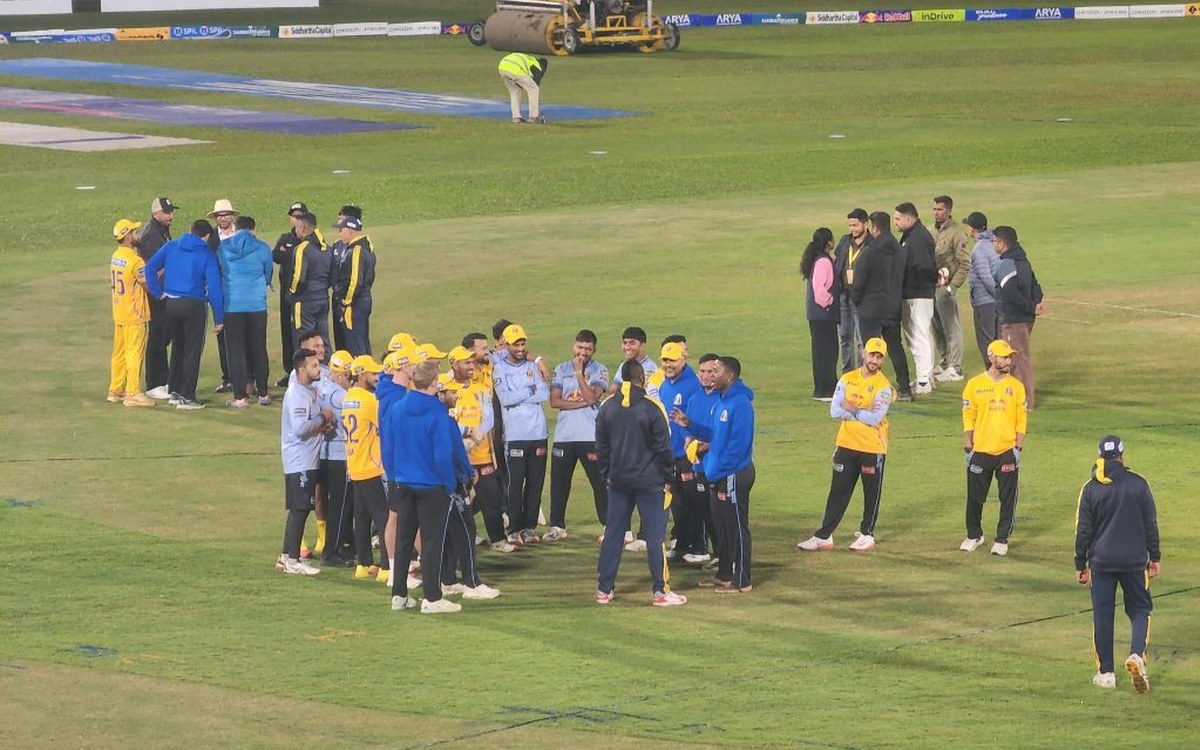
Saturday at the TU Ground in Kirtipur had already lost its opener, Lumbini Lions vs Chitwan Rhinos, abandoned without a toss, and only tireless ground-staff work and repeated inspections made a shortened second match possible at all. Officials announced a five-over contest between Biratnagar Kings and Sudurpaschim Royals, with the toss set for 7:25 pm and the first ball for 7:41 pm, and both captains had agreed to the arrangement. Then the toss did not happen. Biratnagar captain Sandeep Lamichhane walked out, but Sudurpaschim captain Dipendra Singh Airee did not, and more than an hour of uncertainty followed.
OnlineKhabar's report of 1 November 2026 puts the central fact bluntly: under the rules, a match cannot be played once the cutoff time has passed, yet this match began at 9:15 pm, over an hour after its scheduled start. Reports during the delay said Sudurpaschim's overseas players were unwilling to play, and the team's manager Sunil Thapa, head coach Misbah-ul-Haq and captain Airee held lengthy discussions with Cricket Association of Nepal secretary and NPL Governing Council coordinator Paras Khadka and match referee Wendell Labrooy. The players and coaching staff briefly left the field for the dressing room, before informing officials at 8:54 pm that they were ready to play.
Neither Sudurpaschim nor CAN has publicly provided a detailed official explanation for the delay, OnlineKhabar notes, although the damp outfield and the reluctance of some overseas players to take the field appeared central to the discussions. The walk-off and the late-night talks that saved the match are already a matter of record; what is new, a day later, is the harder question they left hanging. If 7:41 pm was the cutoff, on what basis did a match starting at 9:15 pm count? That is the question CAN has not yet answered.
The Forfeit Option CAN Chose Not to Use
Speaking after the game, Khadka defended the decision to play on a principle: once the match referee and umpires had declared the ground fit, the match had to go ahead. “Once the match referee and umpires decide that the conditions are suitable for play, the match must go ahead. Technically, the game had to be played,” Khadka said. “When the overseas players were not ready to play, we urged them to take the field. That is why it took time.” In his account, the delay was caused not by official indecision but by persuasion: a team that did not want to play had to be talked onto the field.
Khadka was equally direct about the alternative that was available. “We could have directly declared a forfeit. But we tried our best to persuade them to play without creating a dispute,” he said. He added that the rules apply equally to everyone, not to any particular team or individual. The tension is plain: if the rules gave CAN the power to declare a forfeit, and also set a cutoff time that had passed, then playing on at 9:15 pm was an exercise of discretion, not a simple application of a rule. Discretion can be justified, but it needs explaining.
There is a second strand worth noting. By framing the delay as players being unwilling rather than conditions being unfit, CAN placed the dispute in team conduct rather than ground safety. A team refusing to play when officials have declared conditions fit faces one kind of consequence; a genuinely unsafe ground faces another. Until CAN publishes its own account of which it was, and what the referee recorded, the two explanations will run side by side.
Biratnagar's Side and the Rutherford Incident
Lamichhane, whose team had been ready throughout, gave a contrasting account of the evening. “Our players, including the overseas players, were fully ready to play. We wanted to play. But our position was that we would abide by whatever decision the officials made,” he said. He also praised the people easiest to forget in a dispute about rules: “For me, the most important thing is cricket. We should appreciate the spectators who stayed at the stadium from the time it rained in the afternoon until 11 or 12 at night, and the grounds staff who worked continuously to make the field fit for play.” On the question of why the opposition was not ready, he left it to the officials: “Perhaps the opposition team's overseas players were not ready. The officials would be in a better position to clarify that.”
Even after the delay, controversy continued before the first delivery, when the umpires intervened over Sudurpaschim's fielding arrangement: the side had initially not sent West Indies player Sherfane Rutherford onto the field, with Tek Rawat fielding in his place, and only after the umpire's instruction did Rutherford join the team. During the first three overs, Rutherford was seen fielding with his hands in his pockets. Coming after the pre-match disagreement, the delayed appearance raised further questions about Sudurpaschim's preparations.
The match itself was brief and decisive. Andre Russell's all-round show powered Biratnagar's 35-run win, their first victory of the season after two defeats, lifting them off the foot of the early points table. None of that settles the rulebook question: a result can be legitimate as a contest while the process that produced it stays unexplained, and it is the process that the report asks CAN to account for.
Why the Rulebook Question Matters Beyond One Night
This is where the story stops being about one wet Saturday and starts being about how the league is run. Saturday's match was saved by persuasion, led by the governing body's own secretary, after inspections and the referee's authority had failed for nearly two hours. Persuasion worked, and the crowd got its cricket. But persuasion is not a rule. The next rain-affected evening will now arrive with a precedent attached: a team that stalls can expect a negotiation, and a cutoff can apparently be passed without public explanation. That precedent will shape how captains, coaches and referees behave next time the covers come out.
The safety question cuts both ways. Sudurpaschim's objection was not frivolous: the outfield was wet enough that the boundary had to be pulled in, a genuine injury risk. Biratnagar's position was not unreasonable either: officials had inspected, staff had worked for hours, and the referee had declared the match playable. Both positions were defensible, which is why a league needs a published wet-weather protocol rather than an improvised negotiation: a clear cutoff policy, a named decision-maker, a forfeit trigger, and a communication plan for supporters travelling to Kirtipur on tickets. The schedule still has weeks to run, and Kirtipur has already shown it cannot be trusted to stay dry.
What CAN does next decides whether Saturday becomes a footnote or a turning point. A short clarification would settle most of it: on what basis the 9:15 pm start was lawful, whether the cutoff was revised or the referee exercised discretion, what the referee recorded, and whether any action under the regulations will follow. None of that requires relitigating the result. The live scores on Saturday told supporters the match was delayed; they could not tell them whether the rules still applied while it was delayed. Until CAN answers that, the most important document at Kirtipur is not the scorecard but the rulebook, waiting to be read out loud.
FAQs
Why is NPL Match 8's start time now under scrutiny?
The five-over match was scheduled to start at 7:41 pm, which was its cutoff time, but it only began at 9:15 pm after Sudurpaschim Royals delayed taking the field. OnlineKhabar's 1 November 2026 report notes that under the rules a match cannot be played once the cutoff time has passed, so CAN needs to explain how the late start was allowed.
Could Sudurpaschim Royals have forfeited Match 8?
Yes, according to CAN secretary Paras Khadka, who said after the match: 'We could have directly declared a forfeit.' He said CAN instead chose to persuade Sudurpaschim to play without creating a dispute, because the match referee and umpires had declared the conditions suitable for play.
What did Biratnagar captain Sandeep Lamichhane say about the delay?
Lamichhane said his players, including the overseas players, were fully ready to play and that his team would abide by whatever decision the officials made. He also praised the spectators who stayed at the stadium until late at night and the grounds staff who worked continuously to make the field fit for play.
What happened with Sherfane Rutherford before the first ball?
Before the first delivery, the umpires intervened because Sudurpaschim had initially not sent Rutherford onto the field, with Tek Rawat fielding in his place. After the umpire instructed Rutherford to come on, he joined the team, and during the first three overs he was seen fielding with his hands in his pockets.
Comments