
Quick Facts
- Technology
- Decision Review System (DRS)
- Reviews per innings
- Two unsuccessful reviews per team
- Cost
- Rs15–20 million, shared by CAN and the eight franchises
- Schedule adjustment
- 30 extra minutes built in per match
- Season
- October 26 – November 21, TU Ground, Kirtipur
Teams will be able to challenge umpiring decisions for the first time in the league's history, with ball tracking, edge detection and video reviews in place for every match of the October 26 to November 21 season.
Technology arrives after past umpiring controversies
The third edition of the Nepal Premier League will be played with the Decision Review System for the first time, giving teams the right to challenge certain umpiring decisions. The Cricket Association of Nepal has introduced the technology following controversies over decisions in previous editions, and it will be operational from the opening match of the season on October 26.
The move puts the NPL in line with major franchise leagues around the world. For a competition billing itself as the "Festival of the Himalayas", the arrival of review technology is as much about credibility as correcting mistakes — a signal that the league's officiating is ready for the bigger stage that its newly granted official T20 status demands.
Ball tracking, edge detection and video reviews
The system will use three-dimensional ball tracking to adjudicate leg-before-wicket decisions, tracing the ball's trajectory to assess whether it would have hit the stumps. Edge detection and sound-wave technology will determine whether the ball made contact with the bat — the two pillars of any modern review setup.
Video reviews will also cover run-outs, stumpings, front-foot no-balls, wides judged by height and measurements of sixes. Each team will be allowed two unsuccessful reviews per innings, the standard international allocation, which forces captains to spend their challenges judiciously rather than speculatively. The third umpire's calls on wides judged by height and measurements of sixes will also lean on calibrated camera angles — exactly the kind of broadcast infrastructure the upgraded Kirtipur setup is designed to provide. Fans can follow every referral as it happens through the live scores hub.
The cost and the clock
Quality comes at a price. CAN secretary Paras Khadka says introducing the system will cost around Rs15 million to Rs20 million, with CAN and the eight franchises sharing the expense — a significant outlay for a three-week tournament, and a measure of how seriously the board takes the credibility question.
There is also a time cost: reviews are expected to add about 30 minutes to matches, and the organisers have built an additional 30 minutes into the schedule. The timeline was tight — as recently as October 18, Khadka said a final decision on implementation would come within three days — but the confirmation arrived with the season just days away.
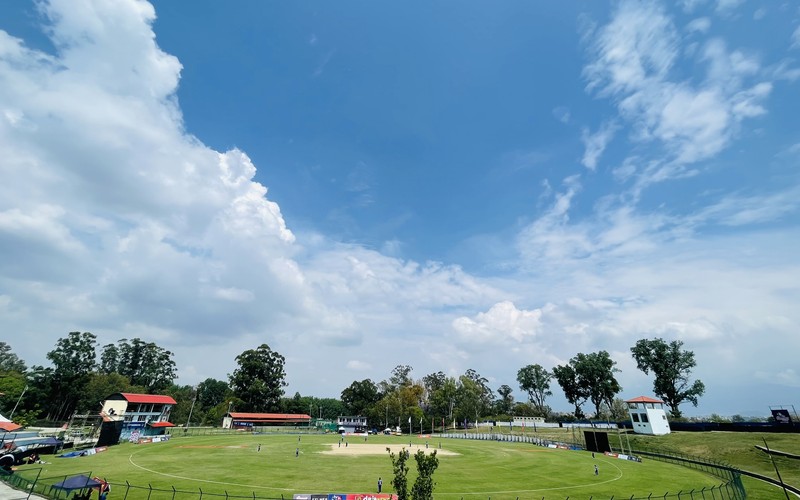
Every match of the season will be staged at the upgraded TU International Cricket Ground in Kirtipur, which has also received new broadcast and spectator facilities ahead of the tournament. The upgrades include around 2,000 additional seats, a covered stand, an LED scoreboard, digital perimeter boards, player dugouts with private dining facilities, a media centre, a dedicated family zone and improved toilet facilities — the full infrastructure a review system needs, from camera positions to the big screen the third umpire's verdicts will play out on.
A credibility milestone for the league
DRS does not arrive in isolation. The third season has already secured official T20 status from the ICC, meaning performances will count towards official career statistics, and franchises have responded by recruiting some of the biggest names in the game. With tickets for the season in fierce demand and the points table race about to begin, the league is professionalising on every front at once.
The system will adjudicate some of the biggest names in franchise cricket — from David Warner's driving to Andre Russell's power-hitting — and on Kirtipur's turning surfaces, the LBW and bat-pad reviews could decide tight contests. Spinners historically thrive at the ground, which means the ball-tracking element may get more of a workout than at flatter venues.
The real test starts on October 26, when the technology faces its first live examination. The first overturned decision of the season will show whether the investment was worth it — and the streaming audience will be watching the replays as closely as the umpires.
FAQs
Will NPL Season 3 use DRS?
Yes. Season 3 is the first NPL edition to use the Decision Review System. It covers LBW decisions through three-dimensional ball tracking, edges through edge detection and sound-wave technology, plus video reviews for run-outs, stumpings, front-foot no-balls, wides judged by height and measurements of sixes.
How many reviews does each team get per innings?
Each team is allowed two unsuccessful reviews per innings — the standard international allocation, which forces captains to use challenges judiciously rather than speculatively.
How much is the NPL's DRS costing?
Around Rs15 million to Rs20 million. CAN secretary Paras Khadka confirmed the cost will be shared between the Cricket Association of Nepal and the eight franchises.
Will DRS make NPL matches longer?
Reviews are expected to add about 30 minutes to each match, and the organisers have built an additional 30 minutes into the schedule to accommodate them.
Comments