
Quick Facts
- Malan's innings
- 70 off 50 balls, five fours and five sixes
- Chitwan's result
- 157/3 beat Biratnagar Kings' 149 by eight runs
- Talat's wickets
- Three — Moeen Ali, Kusal Perera and Abhishekh Tiwari
- Karnali's result
- 132/9 beat Janakpur Bolts' 113 by 19 runs
- PCB NOC fee
- US$25,000 per player demanded by the PCB
Chitwan Rhinos won with three players who reached the ground straight from the airport, and Karnali Yaks won with a Pakistani all-rounder most expected to miss the tournament. In the first week of NPL 2026, the last-minute signing has not been a compromise — it has been a match-winner.
Airport arrivals, instant impact
Chitwan Rhinos had to rebuild their overseas contingent days before their first match. The three Pakistani players they had signed — Usama Mir, Hasan Ali and Mohammad Nawaz — could not play after the Pakistan Cricket Board's no-objection certificate row, so the Rhinos turned to England instead. Dawid Malan, Daniel Richard Mousley and Tom Taylor reached the Tribhuvan University International Cricket Ground in Kirtipur directly from the airport, according to the Kathmandu Post, and went straight into the XI against Biratnagar Kings.
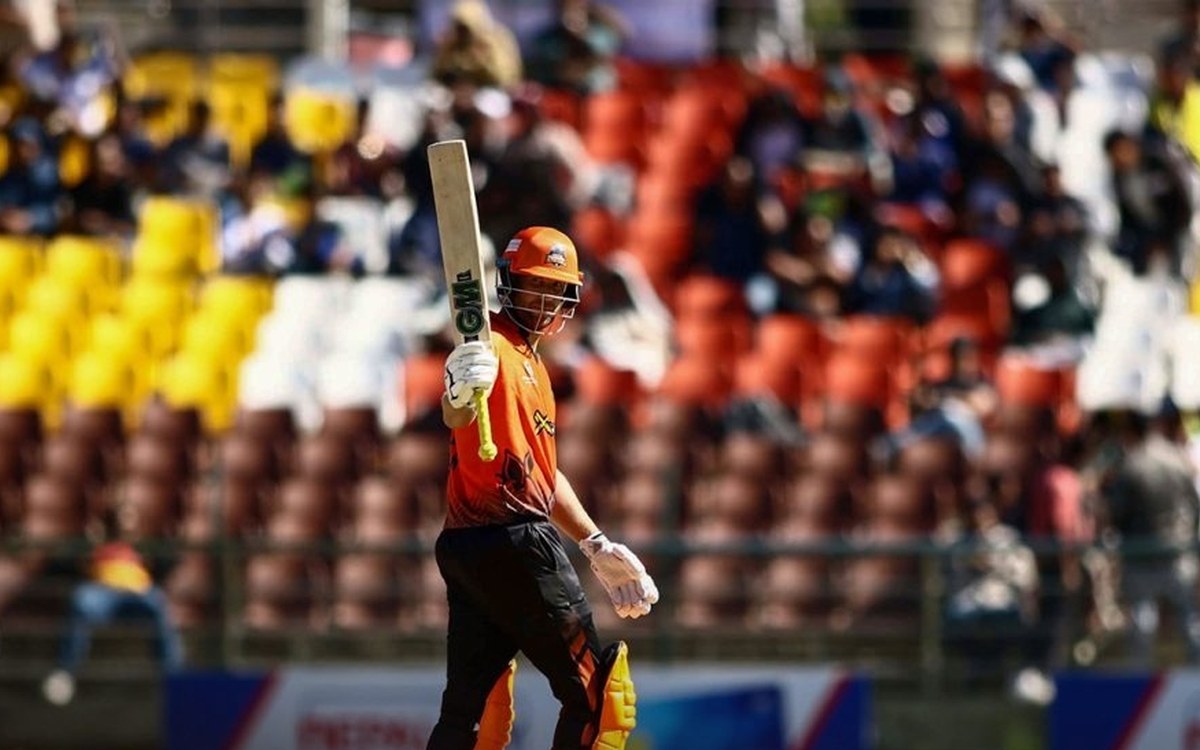
Malan, returning to the franchise he played for in 2025, made the adjustment look routine. He struck the first half-century of the third season, reaching fifty off 41 balls before finishing on 70 off 50, with five fours and five sixes. Online Khabar records the innings as 70 off 51 balls, a one-ball difference in the two reports that does not change the story: an opener with no training session behind him set the tone for the whole innings. He shared a 58-run opening stand with Dev Khanal, and captain Ravi Bopara (32 not out) and Mousley (29 not out) finished the innings at 157 for three.
Biratnagar, chasing 158, were bowled out for 149 in 19.3 overs, and Chitwan won by eight runs. Mousley and Taylor took a wicket each, so all three of the airport arrivals contributed to the win. It was the sharpest possible answer to the question hanging over the tournament's first week: whether a team thrown together at the last minute could compete at all.
Talat's surprise start for Karnali
The other half of the story unfolded in the day's second match, where Karnali Yaks fielded a Pakistani player almost nobody expected to see. Three franchises had signed seven Pakistani cricketers for the season, the Post reports, but the PCB's demand of an additional US$25,000 per player for clearance left six of them out of the opening round. Janakpur Bolts had to keep their Pakistani duo, Iftikhar Ahmed and Hunain Shah, as substitutes even though both were at the ground. Karnali, though, had Hussain Talat in their XI.
A Karnali official, speaking to the Post on condition of anonymity, explained the difference in plain terms: “We completed the necessary procedure regarding Talat. If a cricket board has a rule for its players, it should be followed. We followed it and had Talat play for us.” The Post reads that as confirmation that Talat's fee was paid, while the procedure for the other players remained under way and no replacements had been announced.
Talat repaid the effort with the ball. He took three wickets — Moeen Ali, Kusal Perera in the same over, and Abhishekh Tiwari, who had been holding the Janakpur chase together until the 19th over — as Karnali defended 132 for nine and bowled Janakpur out for 113 to win by 19 runs. Unish Bikram Singh Thakuri also took three wickets, and the Yaks had their first win of the season.
Lamichhane's blunt response
Biratnagar captain Sandeep Lamichhane was asked after the Chitwan defeat whether losing to a side whose overseas players had come straight from the airport made the result heavier. He did not accept the premise. “I think you should ask the question to yourself,” he said. “There are so many things happening in the world and so many cricket tournaments. It is not easy to have players arrive early.”
He added that his own squad had bonded well in the few days since their overseas players — including Andre Russell, Shubham Ranjane and Charith Asalanka — landed in Kathmandu, and put the defeat down to batting rather than preparation: “T20 brings a great experience to players that you can take the game anywhere at any time. It is just a bad day with shot selections [for us].” The points table after the opening round backed his refusal to panic — one early loss, in a long league, is a setback, not a verdict — but the contrast with Chitwan's fresh faces was impossible to miss. The team with the least preparation had the most settled performance on the day, a point the earlier Malan signing announcement could not have predicted.
A wider lesson for NPL squads
The deeper point of the Post's report is not about one innings or one spell. It is that the NPL's first week has tested, and so far rejected, the assumption that late changes must damage a team. Franchises build squads months in advance, announce signings, and plan combinations around specific players — yet Chitwan replaced three players in a day and won, and Karnali kept one player through a paperwork fight and won. Experience, in both cases, travelled better than preparation did.
That matters because the disruption is not over. The Post noted that Karnali's biggest signing, South Africa's David Miller, and Kathmandu Gorkhas' David Warner had yet to arrive when its report was published, with a crowded global calendar pulling players in several directions at once. The schedule will not wait for anyone: every franchise will, at some point this season, field a player who landed hours earlier or a replacement signed days earlier. The first week's evidence says that is a manageable problem, not a fatal one.
There is also a strategic warning in the report for the franchises themselves. If board clearance can be held up by a last-minute fee, teams may start favouring players from boards with more flexible NOC policies, or top talent from Associate nations and non-contracted internationals who face no such restrictions. The NOC row already pushed the league's franchises to demand a foreign-player draft, as covered in the earlier draft-demand report. The lesson of the opening round is that the league can survive the chaos — but the franchises that plan for it, rather than merely reacting to it, will be the ones still standing when the playoffs arrive.
FAQs
Why did Chitwan Rhinos change their overseas players at the last minute?
Chitwan had signed three Pakistani players — Usama Mir, Hasan Ali and Mohammad Nawaz — but they could not play after the PCB's NOC row, in which the board demanded an additional US$25,000 per player. The Rhinos replaced them with Dawid Malan, Daniel Richard Mousley and Tom Taylor, who arrived in Kathmandu on the day of the match.
What did Dawid Malan do on his return to Chitwan?
Malan scored the first half-century of NPL Season 3, reaching fifty off 41 balls and finishing on 70 off 50 balls with five fours and five sixes. His innings helped Chitwan post 157 for three and beat Biratnagar Kings by eight runs.
How did Hussain Talat end up playing for Karnali Yaks?
A Karnali official told the Kathmandu Post that the franchise completed the necessary procedure for Talat and followed the PCB's rule, which the Post reads as confirmation that his US$25,000 fee was paid. Talat then took three wickets as Karnali beat Janakpur Bolts by 19 runs.
Do late arrivals hurt NPL teams?
The first week's evidence says no. Chitwan won with three players who reached the ground straight from the airport, and Biratnagar captain Sandeep Lamichhane said it is not easy for players to arrive early given how many tournaments are played around the world. Preparation time helps, but experience and adaptability have mattered more so far.
Comments