
Quick Facts
- Matches counted
- 14 completed matches (Matches 1–6, 8–15); Match 7 was abandoned without a toss
- Field first after winning the toss
- 13 of 14 matches
- Bat first after winning the toss
- 1 of 14 — Kathmandu Gorkhas, Match 5
- Toss-winners' record
- 7 wins, 7 losses in 14 matches
- Venue
- TU International Cricket Ground, Kirtipur
- Next toss test
- Match 18, Kathmandu Gorkhas vs Lumbini Lions, 7 November, 4:30 PM NST
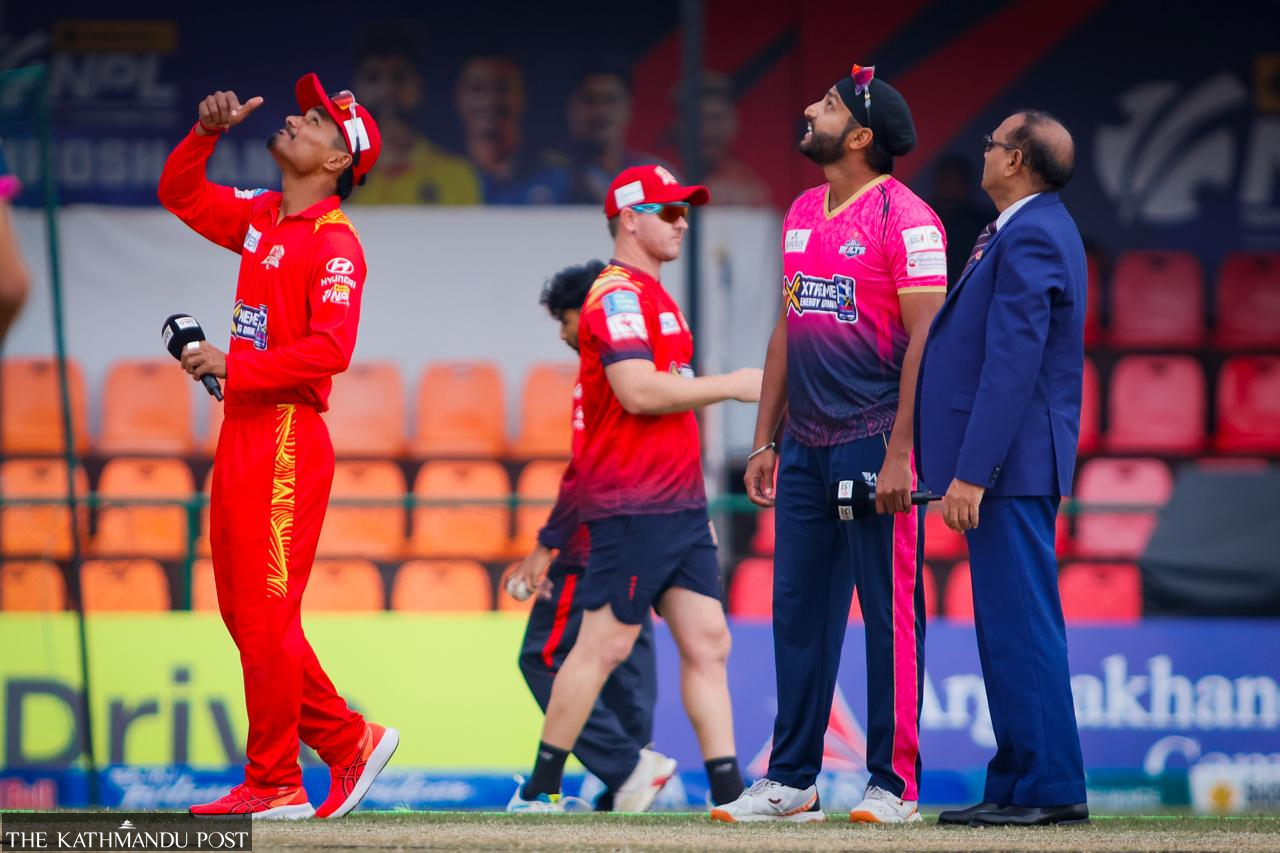
Fourteen matches into Nepal Premier League Season 3, the toss at the TU International Cricket Ground in Kirtipur has settled into a routine, and the routine is not working the way captains expect it to. The team that has won the toss has chosen to field first in 13 of the 14 completed matches. It has gone on to win only seven of them. The coin, in other words, has been worth almost nothing. What has decided these matches is everything that happened after it: the catching, the bowling at the death, and whether the batters trusted the chase.
The 13–1 split
Only one captain in the first 14 completed matches has looked at the Kirtipur pitch, won the toss and decided his team would bat first. The other 13 all sent the opposition in. The seventh match of the season, between Lumbini Lions and Chitwan Rhinos, never reached a toss at all: rain left the outfield waterlogged, the match was abandoned without a ball bowled, and the points were shared.
Of the 13 teams that won the toss and fielded, seven went on to win and six went on to lose. Lumbini Lions have done it twice, winning the opener against Sudurpaschim Royals by seven wickets and Match 13 against Pokhara Avengers by eight wickets. Sudurpaschim Royals have done it twice as well, against Pokhara Avengers in Match 4 and Chitwan Rhinos in Match 11. Kathmandu Gorkhas have done it twice, against Karnali Yaks in Match 10 and Biratnagar Kings in Match 15. Karnali Yaks have done it once, against Biratnagar Kings in Match 6.
The six who fielded first and lost tell the other half of the story. Biratnagar Kings won the toss in Match 2 and still lost to Chitwan Rhinos by eight runs. Janakpur Bolts won it in Match 3 and lost to Karnali Yaks by 19 runs, won it again in Match 12 and lost to Biratnagar by two runs, and won it again in Match 14 and lost to Lumbini by 16 runs. Pokhara Avengers won it in Match 9 and lost to Janakpur by nine runs. Sudurpaschim Royals won it in the rain-shortened Match 8 and lost to Biratnagar by 35 runs. Three of those six defeats were by fewer than 20 runs. The toss gave them first use of the ball. It did not give them the match.
The one captain who batted
Kathmandu Gorkhas are the exception, and the exception lost too. In Match 5, on 29 October, Kathmandu won the toss against Janakpur Bolts and chose to bat first, the only time any captain has done so in the season. They were bowled out for 115 in 19.3 overs, with 17-year-old Rahul Yadav taking four for 31, including both openers. Janakpur knocked off the target with 16 balls to spare, Moeen Ali unbeaten on 58 off 51 balls and Saif Hassan unbeaten on 40 off 39, winning by eight wickets. It was Janakpur's first win of the season and Kathmandu's first game, and it left the season's only bat-first decision looking like a warning rather than an alternative.
That is the full record of batting first after winning the toss: one match, one defeat. Nobody has tried it since.
Thursday told the story twice
The pattern was on show twice in a single day on Thursday, 5 November, and the two matches could hardly have made the point more clearly. In the afternoon, Janakpur Bolts won the toss against Lumbini Lions and sent them in. Lumbini lost D'Arcy Short to the first ball of the match, edged behind off Lalit Rajbanshi, and still posted 149 for eight, with captain Rohit Paudel top-scoring on 38 off 31 balls. Janakpur's chase never got going: they were 55 for five after ten overs, and finished on 133 for eight, 16 runs short, despite Harmeet Singh's 33 off 20 balls and Aaditya Mahata's unbeaten 30. Short, who had fallen for nothing with the bat, took three for 23 with the ball.
In the evening match, Kathmandu Gorkhas won the toss against Biratnagar Kings and made the same choice. This time it worked. Biratnagar were bowled out for 83 in 18.3 overs, Andre Russell managing only three off five balls, and Kathmandu chased the target down in 9.4 overs, David Warner unbeaten on 44 off 24. Same decision, same evening, opposite outcomes, separated by the quality of the bowling and the fielding that followed the toss.
Biratnagar themselves supplied the sharpest contrast of the season. Twice they were invited to bat first. In the rain-shortened Match 8 on 31 October, reduced to five overs a side, they smashed 105 for two, with Shehan Jayasuriya striking 39 off 11 balls, and won by 35 runs. Six days later, invited to bat first again by Kathmandu, they were all out for 83. The toss decision was identical. The batting was not.
Why every captain bowls first
There are good reasons the choice is so one-sided. Under floodlights at Kirtipur, dew makes the ball harder to grip as the evening wears on, and the side bowling second feels it most. Captains also like the look of a fresh pitch in the first innings: overnight fog leaves residual moisture in the surface, the ball moves early, and the pitch flattens out as the afternoon sun bakes it, which makes the chase feel safer than setting a target.
It is also simply how the shortest format is played now. A generation ago, the orthodoxy was to bat first almost every time. Ian Chappell, the Australian captain of the early 1970s, used to say a captain should bat first nine times out of ten, and think about it on the tenth. That thinking has turned around. A 2017 analysis of the Big Bash League found teams chasing more often than ever, and Eoin Morgan, England's limited-overs captain at the time, put it down to comfort: batters prefer knowing exactly what they need, and the unease of guessing a good total has only grown as batting has become more aggressive. At Kirtipur this season, every captain bar one has agreed with him.
The fielding is where tosses are lost
But the numbers say the decision itself is not the advantage captains think it is, and the people closest to the defeats have pointed at something else. After the Match 14 loss, Janakpur captain Harmeet Singh said at the post-match presentation that his side had given away extra runs through misfields and dropped catches, and that the total would have looked very different without them. His head coach, Shivnarine Chanderpaul, said the same thing in the press conference afterwards: the side had not fielded well and had not batted well, and should have restricted Lumbini to a lower target.
Biratnagar's head coach, Dhammika Prasad, made the wider point after the Match 15 defeat: teams should be ready to bat or bowl first, and mostly the batters have to step up, whether to post a big total or chase one down. The evidence backs him. The teams that lost the toss have not been handicapped by it: they have won seven of the 14 completed matches, including Chitwan's eight-run defence of 157 against Biratnagar in Match 2 and Karnali's 19-run win over Janakpur in Match 3. When the side batting first has shown intent, it has won; when it has not, it has lost, and the toss has had nothing to do with either outcome.
What it means for the run-in
Lumbini Lions, the defending champions, still lead the table with seven points from four matches, and they have now gone ten matches without defeat, stretching back through the six wins of last season's title run. They have won the toss and fielded in two of their three wins, and lost the toss and batted in the other. The coin has not been the difference for them either.
The next test comes on Saturday evening, when Kathmandu Gorkhas meet Lumbini Lions in Match 18 at 4:30 PM NST. Whoever wins the toss will almost certainly field first. On the evidence of the first 14 completed matches, that will be the least interesting thing about the evening. The toss has decided nothing. The fielding, the death bowling and the nerve of the chase have decided everything.
FAQs
How often have captains fielded first after winning the toss in NPL Season 3?
In 13 of the first 14 completed matches. Only Kathmandu Gorkhas, in Match 5 against Janakpur Bolts on 29 October, chose to bat first after winning the toss — and they lost by eight wickets.
How many times has the team winning the toss gone on to win the match?
Seven times in 14 matches. The toss-winners won seven of the 13 matches in which they fielded first, and lost the only match in which they batted first.
Which teams have won a match after winning the toss?
Lumbini Lions in Matches 1 and 13, Sudurpaschim Royals in Matches 4 and 11, Kathmandu Gorkhas in Matches 10 and 15, and Karnali Yaks in Match 6 — seven wins between them.
When is the next match, and does the toss matter there?
Match 18, Kathmandu Gorkhas vs Lumbini Lions, is at 4:30 PM NST on Saturday, 7 November at Kirtipur. On the season's evidence the toss will matter less than how the team that fields first actually fields.
Comments